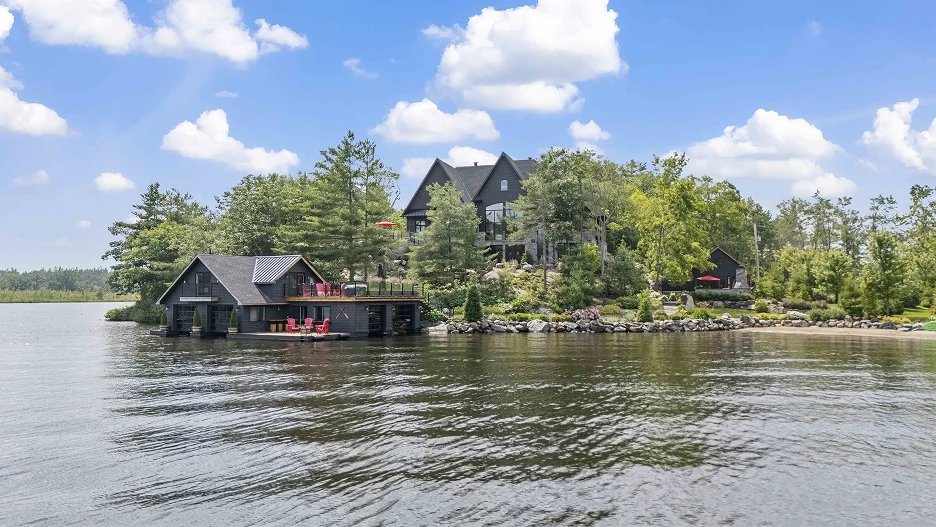
Cottage closing costs in Ontario are consistently underestimated by buyers who focus on the purchase price and overlook the significant layer of transaction costs that arrive at the closing table. Land Transfer Tax, legal fees, title insurance, professional inspections, mortgage appraisal, and pro-rated adjustments all form part of the true cost of completing a cottage purchase. On a $1.5 million property, total closing costs regularly exceed $45,000 before the first mortgage payment. Buyers who plan for these costs before making an offer purchase with confidence. Those who discover them at closing face avoidable financial strain.
Why Cottage Closing Costs in Ontario Deserve Serious Upfront Planning
The purchase price of an Ontario cottage is the figure that drives search decisions, informs offer positioning, and anchors financial planning. It is not, however, the amount a buyer actually needs to close the transaction. Between the accepted offer and the day keys are handed over, a meaningful set of additional costs accumulates that represents a genuine and unavoidable financial obligation.
For a buyer purchasing a $1.5 million Muskoka waterfront cottage, total closing costs commonly reach $45,000 to $60,000 above the purchase price, and in more complex transactions they can go higher. For a buyer purchasing a $750,000 entry-level waterfront property, closing costs of $20,000 to $30,000 above the purchase price are typical.
These are not incidental expenses. They are a structural part of the transaction, and they require capital that must be available on closing day, not sourced from the mortgage itself. Buyers who plan for them before the search begins make better offer decisions and arrive at closing without surprises.
CV Real Estate walks every buyer through a complete cost planning conversation before the search begins.
Ontario Land Transfer Tax: The Largest Single Closing Cost
Ontario’s Land Transfer Tax (LTT) is the most significant closing cost in any Ontario cottage transaction. It is levied on the total consideration paid for the property and is due on closing day. Because Muskoka and Ontario’s cottage regions fall outside the City of Toronto, the Municipal Land Transfer Tax does not apply. However, the provincial rate is substantial at higher price points.
The provincial LTT is calculated on a progressive tiered basis:
- 0.5% on the first $55,000
- 1.0% on the portion from $55,001 to $250,000
- 1.5% on the portion from $250,001 to $400,000
- 2.0% on the portion from $400,001 to $2,000,000
- 2.5% on any portion above $2,000,000
The LTT on a selection of common Muskoka purchase prices works out approximately as follows:
| Purchase Price (CAD) | Approx. Ontario LTT |
| $750,000 | ~$11,475 |
| $1,000,000 | ~$16,475 |
| $1,500,000 | ~$26,475 |
| $2,000,000 | ~$36,475 |
| $3,000,000 | ~$61,475 |
These figures are approximate. The Ontario LTT is calculated on the exact consideration paid and should be confirmed using the provincial calculator before an offer is finalized.
The first-time homebuyer LTT rebate available for principal residence purchases does not apply to recreational property transactions. Cottage buyers pay the full provincial LTT regardless of whether it is their first property purchase.
Legal Fees and Disbursements
Every Ontario property transaction requires a real estate lawyer to conduct the title search, review all registered encumbrances, manage the mortgage instructions from the lender, and register the transfer of title on closing day. For a cottage transaction, the legal work is typically more involved than for a standard residential purchase because of the additional documentation associated with waterfront properties: septic permits, dock approvals, Crown land licences, easements, and in some cases survey discrepancies that require resolution before title can be transferred cleanly.
Legal fees for an Ontario cottage transaction typically range from $1,800 to $3,500 in professional fees, plus disbursements.
Disbursements are the out-of-pocket costs incurred by the lawyer on the buyer’s behalf in completing the transaction, and they include:
- Title search and off-title search fees: $300 to $600, covering searches of registered title, execution searches, tax arrears searches, and other public record reviews.
- Registration fees: Ontario charges fees for the registration of the transfer and any mortgage at Land Registry. These are typically $100 to $250 depending on the number of documents registered.
- Courier and administrative costs: $100 to $200 for the handling of closing documents.
- Tax holdback for non-resident sellers: Where the seller is a non-resident of Canada, the lawyer may be required to withhold a portion of the purchase price pending CRA clearance. This is not a cost to the buyer directly but affects the closing flow.
Total legal fees including disbursements for a typical Ontario cottage transaction commonly run $2,200 to $4,200. Complex transactions, those involving Crown land licences, unusual title issues, or corporate ownership structures, can exceed this range.
The Law Society of Ontario maintains a public directory of licensed Ontario lawyers for buyers who need to identify qualified legal representation with waterfront transaction experience.
Title Insurance
Title insurance is a one-time premium that protects the buyer and the lender against defects in title that a standard title search may not reveal. For Ontario cottage properties, where older titles, historical easements, unregistered interests, and unpermitted structures are more common than in urban residential markets, title insurance is a strongly recommended protection.
Two policies are typically relevant:
- Owner’s policy: Protects the buyer against title defects, survey errors, unpermitted structures, certain zoning non-compliances, and fraud. A one-time premium for a $1.5 million cottage property typically costs $400 to $700.
- Lender’s policy: Required by most mortgage lenders to protect their interest in the property. The premium is typically comparable to the owner’s policy and is usually charged separately.
The combined cost of both title insurance policies for a Muskoka cottage is typically $700 to $1,400 at closing. Given the specific title risks associated with waterfront properties, this cost delivers meaningful protection relative to its premium.
Professional Inspection Costs
A thorough inspection process is not optional on an Ontario cottage purchase, and the cost of the inspection package reflects the multi-component nature of the due diligence that waterfront properties require.
| Cost Item | Low Estimate | High Estimate | Notes |
| Building inspection | $500 | $900 | Qualified inspector with recreational property experience |
| Septic system inspection | $400 | $700 | Includes pump-out and full system assessment |
| Well water quality testing | $150 | $400 | Accredited lab, bacteria + nitrates at minimum |
| Dock & boathouse assessment | $300 | $600 | Structural review by inspector or marine contractor |
| WETT inspection (if applicable) | $150 | $350 | Required for wood-burning appliances by most insurers |
| Total inspection budget | $1,500 | $2,950 | Higher for complex or older properties |
Buyers should budget at the higher end of this range for properties with older structures, multiple outbuildings, or complex water systems. The cost of a thorough inspection package is trivial relative to the potential cost of a failed septic system, unpermitted boathouse, or contaminated well discovered after closing.
Mortgage Appraisal
When a buyer is financing their Ontario cottage purchase through a Canadian lender, the lender will require an independent appraisal of the property before advancing mortgage funds. The appraisal confirms that the purchase price is supported by market evidence and protects the lender’s security position.
A certified appraisal of a Muskoka waterfront cottage by a member of the Appraisal Institute of Canada (AIC) typically costs $500 to $1,000 depending on the property’s location, complexity, and the availability of comparable sales data on the specific lake. Remote or unique properties where comparable sales are limited require more analytical work and are at the higher end of this range.
Appraisal costs are typically paid directly by the buyer and are non-refundable regardless of the outcome of the appraisal. Some lenders will arrange the appraisal directly and bill the cost to the buyer at closing.
Home Insurance Binder
Most mortgage lenders require proof of property insurance to be in place before they will advance mortgage funds on closing day. Buyers should arrange their cottage insurance policy and obtain a binder or confirmation letter from their insurer before the scheduled closing date.
While the cost of the annual insurance premium is an ongoing ownership cost rather than a one-time closing cost, the first year’s premium or a pro-rated portion of it is sometimes due at closing depending on the policy structure and payment arrangement.
Annual cottage insurance premiums for a Muskoka waterfront property typically range from $2,500 to $6,000 or more depending on property value, structure type, and coverage requirements.
Statement of Adjustments: Pro-Rated Costs at Closing
The Statement of Adjustments is a document prepared by the buyer’s lawyer that reconciles all financial obligations between buyer and seller as of the closing date. For an Ontario cottage, this typically involves several pro-rated cost adjustments that affect the final funds required to close.
Property Tax Adjustment
If the seller has prepaid property taxes for the calendar year beyond the closing date, the buyer owes the seller a credit for the prepaid portion. If taxes are in arrears at closing, the seller owes the buyer a credit. The net adjustment depends on the tax payment schedule of the specific municipality and the closing date relative to payment due dates.
On a Muskoka property with annual taxes of $12,000, a closing in October would mean the buyer owes the seller a credit of approximately $2,000 for the two remaining months of the tax year the seller has already paid.
Fuel and Utility Adjustments
If the property has a prepaid propane tank or heating fuel supply, the buyer will owe the seller a credit for the remaining fuel value as of closing. On a Muskoka property heading into winter, this can be $300 to $800 depending on the tank size and fill level.
Common Element Fee or Road Association Adjustments
Properties on private roads maintained by a cottage road association may have prepaid annual road maintenance fees. A pro-rated credit to the seller is typical if the annual fee has been paid in advance.
The total impact of adjustments on a typical Ontario cottage closing is usually $1,000 to $5,000 net in either direction depending on the specific property, municipality, and closing date.
HST Considerations on Cottage Purchases
Harmonized Sales Tax (HST) does not apply to the purchase of a used recreational property in Ontario. The vast majority of cottage resale transactions are HST-exempt.
Two situations where HST may apply are worth confirming with legal counsel:
- New construction: If the cottage being purchased is newly constructed and is being sold by a builder, HST applies to the purchase price. On a $1.5 million new cottage, 13% HST amounts to $195,000, which is a material cost that dramatically changes the financial picture of a new build transaction.
- Properties used commercially: If the seller has been operating the property as a commercial short-term rental enterprise and has been claiming HST input tax credits, the sale may trigger HST obligations that require careful structuring. Your lawyer should confirm the HST status of the transaction before closing.
Total Closing Cost Summary
The table below consolidates the full range of closing costs for an Ontario cottage purchase at two representative price points. These are estimates. The actual figures for any specific transaction will vary based on the property, the lender, and the specific professionals retained.
| Cost Item | Low Estimate | High Estimate | Notes |
| Ontario Land Transfer Tax | $11,475 | $36,475+ | $750K to $2M+ purchases |
| Legal fees and disbursements | $2,200 | $4,200 | More complex for waterfront titles |
| Title insurance (owner + lender) | $700 | $1,400 | One-time premium at closing |
| Building inspection | $500 | $900 | Recreational property specialist |
| Septic inspection | $400 | $700 | Includes pump-out |
| Well water quality testing | $150 | $400 | Accredited laboratory |
| Dock & boathouse assessment | $300 | $600 | If applicable |
| Mortgage appraisal | $500 | $1,000 | Required by lender |
| Statement of adjustments | $1,000 | $5,000 | Net pro-rated credits |
| Misc. (survey, WETT, other) | $200 | $700 | Property dependent |
| TOTAL (excl. down payment) | $17,425 | $51,375+ | Varies by purchase price |
This total does not include the down payment, which must be at least 20% of the purchase price for a recreational property mortgage. On a $1.5 million purchase, the down payment alone is $300,000, and total funds required to close are in the range of $340,000 to $360,000.
Planning for Closing Costs Before the Offer
Closing costs are not negotiable items that can be adjusted after an offer is accepted. They are fixed obligations that arrive at the closing table regardless of how the purchase price was negotiated. Buyers who have not budgeted for them before making an offer occasionally find themselves in the difficult position of having their offer accepted and then discovering they do not have sufficient available capital to close.
The practical approach is straightforward: add a realistic closing cost budget to the top of your purchase price ceiling before you begin searching. If your maximum purchase price is $1.2 million, your total required capital is approximately $240,000 in down payment plus $30,000 to $45,000 in closing costs, for a total of $270,000 to $285,000 in available funds. Building that number before the search begins keeps the financial picture honest throughout.
How CV Real Estate Helps Buyers Plan for Closing Costs
Every buyer relationship at CV Real Estate begins with a frank and complete cost conversation. We do not let buyers begin their search without a clear understanding of what it will actually cost to close on the property they are targeting. That transparency is not a formality. It is the foundation of every purchase decision we help our clients make.
Our advisors work through the full closing cost picture with buyers at the initial consultation stage, before a single property is viewed. We connect buyers with mortgage professionals and lawyers who provide binding cost estimates for their specific situation, so the figures on the Statement of Adjustments on closing day are not a surprise.
Reach out through the CV Real Estate to begin a buyer consultation that covers every dimension of your Ontario cottage purchase.
Frequently Asked Questions
1. How much should I budget for closing costs on an Ontario cottage?
For most Ontario cottage transactions, closing costs beyond the down payment range from $20,000 to $55,000 depending on the purchase price and the specific property. Land Transfer Tax is the largest single item, followed by legal fees, inspections, and appraisal costs. Budget a minimum of $25,000 to $30,000 for a $1 million purchase and $40,000 to $50,000 for a $1.5 million purchase before applying property-specific factors.
2. Do first-time buyers get a Land Transfer Tax rebate on a cottage purchase in Ontario?
No. Ontario’s first-time homebuyer Land Transfer Tax rebate applies only to principal residences. A recreational cottage does not qualify for this rebate regardless of whether it is the buyer’s first property transaction in Ontario.
3. Is HST charged on cottage purchases in Ontario?
HST is not charged on the purchase of a used or resale cottage in Ontario. New construction cottages sold by a builder are subject to HST. If the seller has been operating the property as a commercial rental and registered for HST, the transaction may require specific structuring. Your lawyer should confirm the HST status of any transaction before closing.
4. What is a Statement of Adjustments, and when do I receive it?
The Statement of Adjustments is a document prepared by your real estate lawyer that calculates the net financial position between buyer and seller as of the closing date. It accounts for pro-rated property taxes, prepaid fuel or utility balances, and any other amounts owed between the parties. You typically receive the Statement of Adjustments a few days before closing, and the final funds required to close are confirmed at that point.
5. Are cottage closing costs the same as residential home closing costs in Ontario?
The categories are similar, but the inspection costs are higher and more extensive for a cottage transaction because waterfront properties require septic, water quality, and dock assessments that standard urban residential purchases do not. Legal fees also tend to be higher for waterfront transactions due to the additional documentation review involved.
6. Can closing costs be included in my cottage mortgage?
No. Closing costs must be funded from the buyer’s own available capital at closing. They cannot be added to or financed through a conventional cottage mortgage. CMHC mortgage insurance is not available for recreational properties, so there is no mechanism to roll closing costs into the financed amount the way some residential buyers use an insured mortgage structure to do.
Knowing the Full Cost Is What Makes a Confident Purchase Possible
The buyers who close on Ontario cottage properties with genuine confidence are the ones who knew exactly what they were committing to before they made their offer. Closing costs are a fixed and unavoidable part of that commitment. Planning for them is not pessimism. It is the kind of preparation that turns an exciting purchase into a sustainable one.
CV Real Estate is here to help you plan that purchase correctly from the very beginning. Start on the CV Real Estate.
Key Takeaways
- Cottage closing costs in Ontario regularly range from $20,000 to $55,000 above the purchase price depending on the transaction. They are fixed obligations that must be funded from available capital, not the mortgage.
- Ontario Land Transfer Tax is the largest single closing cost item. On a $1.5 million purchase, LTT alone is approximately $26,475. The first-time homebuyer rebate does not apply to recreational properties.
- Legal fees, title insurance, professional inspections, mortgage appraisal, and Statement of Adjustments credits all form part of the total closing cost picture and should be budgeted explicitly before the search begins.
- HST does not apply to resale cottage transactions in Ontario. New construction purchases are subject to HST, which at 13% represents a material additional cost that significantly changes the financial picture.
- CV Real Estate walks every buyer through a complete closing cost analysis at the initial consultation stage so that every purchase decision is made with the full financial picture in view.
Meet The Team
We’re cottage country enthusiasts and vacation property experts, helping renters, buyers, and sellers reach their goals for more than 20 years.