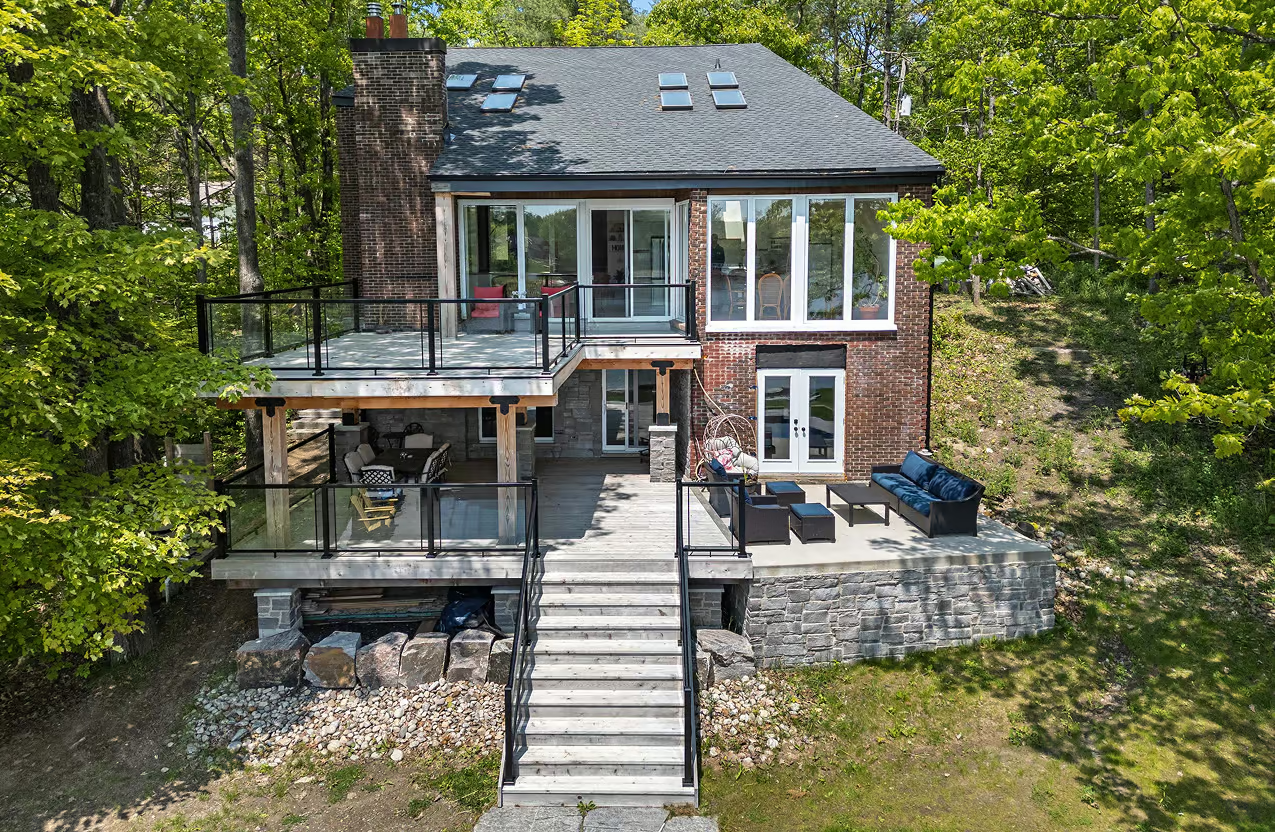
Buying a cottage in Ontario involves a series of steps that go well beyond the standard residential purchase process. This cottage buying checklist covers every critical stage from pre-search preparation through to post-closing responsibilities, giving buyers a clear, actionable framework for approaching one of the most significant property decisions they will make.
Why a Cottage Buying Checklist Matters in Ontario
Ontario cottage transactions are governed by a combination of provincial law, municipal zoning regulations, environmental protections, and waterfront-specific legal requirements that do not apply to standard urban home purchases. Missing even one key due diligence step can result in expensive repairs, compliance issues, or limitations on how you use the property after closing.
This cottage buying checklist for Ontario is designed to help buyers approach the process systematically, whether they are purchasing their first recreational property or adding to an existing portfolio. Each category in the checklist represents a real area of risk that experienced advisors address in every transaction they guide.
CV Real Estate advisors work through each item on this checklist alongside our clients, bringing market-specific knowledge and transaction experience to every engagement. Learn more about our buyer advisory process on the CV Real Estate buyers page.
Phase 1: Pre-Search Preparation
Financial Readiness
- Confirm your maximum purchase price based on available down payment and financing pre-approval from a lender or mortgage broker experienced in recreational property.
- Budget beyond the purchase price for Land Transfer Tax, legal fees, inspection costs, and initial maintenance reserves.
- Confirm CMHC mortgage insurance does not apply to recreational properties, you must have at least 20% available as a down payment under conventional financing terms.
- Assess your existing mortgage obligations. Any primary residence mortgage or home equity financing will factor into your debt service calculations when qualifying for a cottage mortgage.
Defining Your Property Criteria
- Identify your preferred Ontario cottage region: Muskoka, Haliburton, Kawarthas, Georgian Bay, Prince Edward County, or another area aligned with your lifestyle goals.
- Determine your intended use: personal retreat, family cottage, short-term rental, or year-round property.
- Define your minimum requirements for waterfront footage, number of bedrooms, road access type (year-round vs. seasonal), and proximity to the nearest town.
- Clarify seasonal vs. year-round needs: A property that works perfectly as a summer retreat may present real challenges as a year-round home.
Our CV Real Estate residential services page outlines the types of recreational and residential properties we represent across Ontario.
Phase 2: Property Search and Initial Assessment
Working With Your Advisor
- Engage a real estate advisor who specializes in Ontario recreational property and understands the market-specific due diligence requirements for waterfront transactions.
- Review current listings with your advisor, cross-referencing asking prices against comparable sales data for the specific lake or region you are targeting.
- Request a full property history, including previous sale prices, any known capital expenditures, and whether the property has been listed or relisted multiple times.
Initial Property Review
- Confirm the property’s legal description, lot dimensions, and registered frontage: In Muskoka and other cottage regions, stated frontage can differ significantly from legal frontage.
- Identify whether the waterfront is owned or Crown-leased: This distinction affects your rights considerably and should be confirmed at the outset.
- Review municipal zoning designation and confirm what the property is permitted to be used for, including short-term rental eligibility.
- Ask the listing agent whether all structures on the property (boathouse, dock, bunkie, guest cabin) have the required permits.
The District Municipality of Muskoka’s planning portal provides access to official plan documents, zoning bylaws, and shoreline protection policies relevant to Muskoka properties.
For properties outside Muskoka, the Ontario Government’s online zoning and planning resources offer guidance on how to access local official plans and zoning bylaws.
Phase 3: Making an Offer
Offer Conditions
- Include a general inspection condition with a minimum five to ten business days for a qualified inspector with recreational property experience.
- Include a separate septic inspection condition, or address it within the general inspection scope if your inspector is qualified for both.
- Include a well water testing condition requiring current bacteria and nitrate results before waiving.
- Include a financing condition appropriate to your lender’s timeline. Recreational property financing can take longer than standard residential mortgage approvals.
- Request copies of all permits for the dock, boathouse, and any other structures as part of your seller document request.
Purchase Price and Negotiation
- Rely on your advisor’s comparable sales analysis to inform your offer price rather than the listing price alone.
- Factor in identified condition risks (aging septic, older dock, deferred maintenance) when structuring your offer.
- Confirm deposit amounts with your advisor, as recreational property deposits are often proportionally larger than urban home deposits.
The Real Estate Council of Ontario (RECO) provides guidance on buyer rights and standard purchase agreement protections applicable to all Ontario property transactions.
Phase 4: Due Diligence
Building and Property Inspection
- Commission a qualified home inspector with demonstrated recreational property experience. Standard inspectors may not have the knowledge to assess dock structures, water systems, or log and post-and-beam construction.
- Walk through the full inspection report with your inspector, not just the summary. Understand the implications of each flagged item before deciding whether to proceed or renegotiate.
Septic System Assessment
- Engage a licensed septic inspector to assess the current condition, capacity, and compliance of the septic system.
- Request the original septic permit and confirm the system is sized appropriately for the number of bedrooms in the structure.
- Identify whether the replacement bed area for future system replacement meets setback requirements from the shoreline..
Well Water Testing
- Submit a water sample to a licensed laboratory for bacteria, nitrates, hardness, and any additional contaminants relevant to the property’s well type and location.
- Confirm the pressure system is functional and ask about the age and condition of the pump and pressure tank.
Title and Legal Review
- Engage a real estate lawyer with waterfront transaction experience to conduct a full title search before closing.
- Confirm whether any easements, rights of way, or access agreements encumber the property. Understanding riparian rights is essential for any waterfront purchase – these govern how you can use and access the water adjacent to your property.
- Verify that all structures on the property are within permitted setback distances from the shoreline and property lines.
- Review the Certificate of Location or survey document and flag any discrepancies between the registered description and the physical property boundaries.
The Ontario Land Registry Office manages property records for all Ontario real estate transactions and is the authoritative source for title documentation.
For environmental considerations, the Ontario Ministry of the Environment, Conservation and Parks provides guidance on shoreline protections and environmental assessment requirements relevant to waterfront properties.
Phase 5: Closing
Final Preparations
- Confirm your mortgage approval and financing conditions are fully satisfied before the waiver deadline.
- Complete a final walkthrough of the property before closing to confirm the condition has not changed materially from the time of inspection.
- Review the Statement of Adjustments provided by your lawyer to verify all property tax, utility, and cost apportionments are accurate.
- Confirm title insurance coverage is in place for both the lender and yourself personally before funds transfer. Title insurance is strongly recommended for all Ontario waterfront purchases, it protects against title defects, survey errors, and unpermitted structures that a standard title search may not fully reveal.
Closing Day
- Provide certified funds or wire transfer to your lawyer in advance of the closing date to avoid same-day delays.
- Confirm keys and access codes will be provided on the scheduled closing date and that all agreed chattels and inclusions are present.
- Obtain copies of all permits, well and septic records, and any warranties associated with the structure and its systems.
Our advisors remain engaged through closing day and beyond. Learn about the full CV Real Estate services offering to understand how we support clients through each phase of the transaction.
Phase 6: Post-Closing Responsibilities
Registration and Administration
- Register the deed transfer through your lawyer with the Ontario Land Registry Office.
- Update your home insurance policy to reflect the new property and confirm your cottage policy provides appropriate coverage from day one.
- Register with the relevant municipality if required for short-term rental licensing or other local compliance obligations.
- Contact MPAC to confirm your new property assessment and understand your annual property tax obligations.
Property Setup
- Arrange a professional inspection of all mechanical systems (heating, water pump, electrical) if they were not covered in depth during your pre-closing inspection.
- Contact the local lake association to register as a new property owner and access community water quality monitoring data.
- If the property requires seasonal opening and closing procedures, obtain the documentation or service contacts used by the previous owner. Our guide on how to winterize a cottage walks through what this process involves and when to act.
Ready to Use This Checklist? We Are Ready to Help
This cottage buying checklist for Ontario gives you the foundation to approach your property purchase with confidence. But a checklist only goes so far. The real value comes from having an advisor who understands each item on the list, knows how to identify red flags in the field, and can negotiate effectively on your behalf when issues arise.
CV Real Estate provides personalized guidance to Ontario cottage buyers at every stage of the process. Reach out through the CV Real Estate contact page to begin your buyer consultation today.
You can also explore our current residential listings to see how we represent Ontario cottage and recreational properties.
Frequently Asked Questions
1. How long does it typically take to complete all the steps on a cottage buying checklist in Ontario?
From the acceptance of an offer to closing, most Ontario cottage transactions take 30 to 90 days. The condition period, during which inspections, financing, and title review occur, typically runs 10 to 21 business days depending on the complexity of the property and the parties’ timelines.
2. What is the most commonly missed item on a cottage buying checklist?
Permit verification for docks, boathouses, and secondary structures is frequently overlooked. Many waterfront properties have structures that were built without the required approvals, which can create compliance obligations for the new owner after closing.
3. Do I need a separate inspector for the septic system, or can my home inspector assess it?
While some home inspectors are trained to conduct a basic septic assessment, most cottage transactions benefit from a dedicated septic inspection by a licensed professional. A full tank pump and inspection provides the most reliable picture of the system’s current condition and remaining useful life.
4. What happens if issues are identified during the inspection phase?
If material deficiencies are identified during the inspection period, buyers typically have three options: negotiate a price reduction with the seller, request remediation before closing, or withdraw from the transaction if the issues are significant enough. Your real estate advisor will guide you through the most appropriate approach based on the specific findings.
5. Is title insurance necessary for a cottage purchase in Ontario?
Title insurance is strongly recommended for Ontario waterfront purchases. It provides protection against defects in title, survey errors, unpermitted structures, and certain post-closing compliance issues that a standard title search may not fully reveal. Both a lender’s policy and an owner’s policy are advisable.
6. Does this cottage buying checklist apply to all Ontario cottage regions?
The checklist covers due diligence principles that are broadly applicable across Ontario’s cottage markets, including Muskoka, Haliburton, the Kawarthas, Georgian Bay, and Prince Edward County. However, specific regulatory details, zoning bylaws, and shoreline restrictions vary by municipality. Your real estate advisor and lawyer should confirm the requirements specific to the region and property you are purchasing.
Key Takeaways
- A cottage buying checklist for Ontario should cover six phases: pre-search preparation, property search, offer strategy, due diligence, closing, and post-closing administration.
- Septic system assessment, well water testing, permit verification for water structures, and title review are the highest-risk due diligence areas unique to Ontario cottage purchases.
- Waterfront property financing requires a minimum 20% down payment and follows conventional lending rules, with no CMHC mortgage insurance available.
- Title insurance is strongly recommended for all Ontario waterfront transactions to protect against title defects, survey discrepancies, and unpermitted structures.
- Working with a real estate advisor experienced in Ontario recreational property ensures each item on the checklist is executed with the right expertise and attention.
Meet The Team
We’re cottage country enthusiasts and vacation property experts, helping renters, buyers, and sellers reach their goals for more than 20 years.