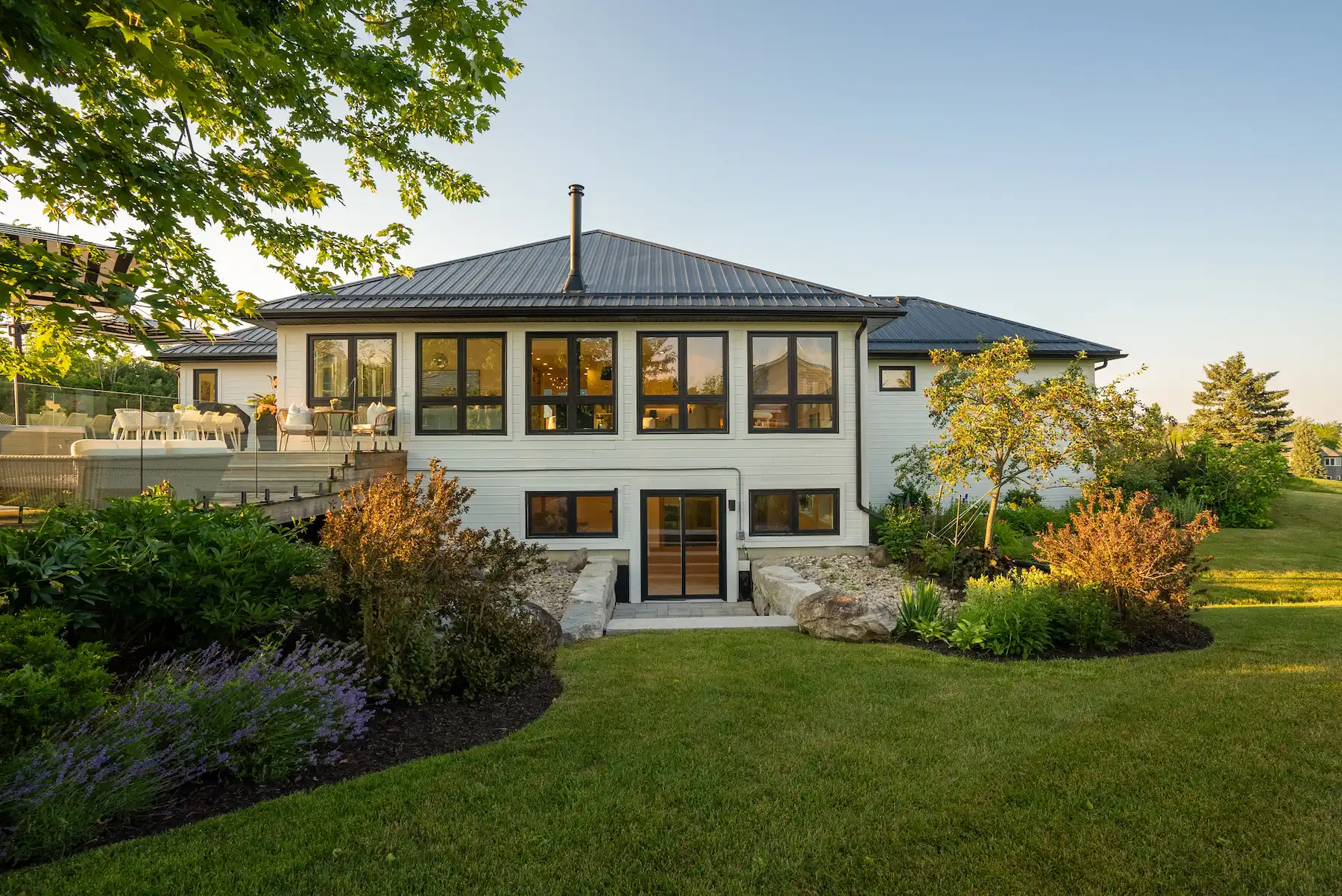
The minimum down payment for a second home in Canada depends on how you intend to use the property. A vacation or family-use cottage can qualify for as little as 5 percent down, while a property purchased primarily for rental income requires a minimum of 20 percent. Understanding which category your purchase falls into determines how much cash you need before you can proceed.
What Is the Minimum Down Payment for a Second Home in Canada?
The minimum down payment for a second home in Canada follows the same tiered structure as a primary residence in most cases. For properties under $500,000, the minimum is 5 percent. For properties priced between $500,001 and $1,499,999, the requirement is 5 percent on the first $500,000 and 10 percent on the remainder. For properties at $1.5 million or more, the minimum is 20 percent and mortgage insurance is not available. These rules are set by the Office of the Superintendent of Financial Institutions (OSFI) and apply to all federally regulated lenders including chartered banks and most credit unions in Canada.
The key distinction that changes everything is intent. A second home classified as a vacation property or family residence qualifies for the insured mortgage tiers above. A property purchased as a rental investment is classified differently and requires a minimum of 20 percent down regardless of purchase price. Lenders apply their own additional scrutiny to second property applications, so qualifying criteria may be stricter than what federal minimums suggest.
For a cottage in Ontario priced at $700,000, the minimum down payment under the vacation property classification would be $45,000. That is 5 percent of $500,000 ($25,000) plus 10 percent of the remaining $200,000 ($20,000). Buyers who go in expecting a flat 5 percent often underestimate their required cash position. CV Real Estate regularly works with buyers exploring cottage investment and helps them understand the financing landscape before they start their search.
How Does the Down Payment Rule Differ Between a Vacation Home and an Investment Property?
The difference between a second home and an investment property is one of the most important distinctions in Canadian mortgage rules. A second home is a property you purchase for personal or family occupancy. It does not have to be used exclusively by you, but it cannot be purchased primarily to generate rental income. An investment property is one where the primary motivation is generating a return through rental income.
|
Category |
Minimum Down Payment |
Mortgage Insurance Available? |
|
Vacation / second home (owner use) |
5% (under $500K) / tiered above |
Yes, under $1.5M |
|
Investment / rental property |
20% minimum |
No |
|
$1.5M+ property (any type) |
20% minimum |
No |
If you intend to rent your cottage on Airbnb or through a property management company for significant portions of the year, some lenders will reclassify the purchase as an investment property and apply the 20 percent down payment requirement. The line is not always clear, and different lenders interpret use differently. Buyers should be transparent with their mortgage broker about how they intend to use the property and let the broker guide the application accordingly.
This distinction matters significantly in cottage country, where many buyers want both personal use and rental income. Understanding the implications before placing an offer protects both your financing position and your tax planning. CV Real Estate draws on experience across cottage country transactions and can connect buyers with mortgage professionals who understand recreational property financing in Ontario. Reviewing the cottage closing costs guide provides additional context on the full cash requirement beyond the down payment.
Can You Use Equity in Your Primary Home as a Down Payment?
Using equity in your primary residence is one of the most common strategies for funding the down payment on a second home or cottage in Canada. If your primary home has appreciated and your mortgage balance is low relative to that value, you may be able to access that equity through a home equity line of credit (HELOC), a refinance, or a second mortgage. Under current federal rules, refinancing is generally limited to 80 percent of a property’s appraised value. Lenders will still require you to qualify for both the existing mortgage and the new one under the stress test, which as of 2026 requires qualification at the higher of your contract rate plus 2 percent or 5.25 percent, whichever is greater.
What Other Costs Should You Plan For Beyond the Down Payment?
The down payment is the largest upfront cost but not the only one. Buyers of second homes in Ontario should budget for land transfer tax, legal fees, title insurance, a home inspection, a well and water quality test if applicable, a septic inspection, and property insurance. . On waterfront properties, the complexity of due diligence increases. Septic systems, well water, dock permits, and shoreline rights require specific inspections that can add thousands of dollars to the transaction cost before the purchase is finalized.
Provincial land transfer tax in Ontario applies to all property purchases. For a $700,000 cottage purchase, the provincial land transfer tax would be approximately $12,475. There is no municipal land transfer tax in most cottage country municipalities, but buyers should confirm this for the specific township where the property is located. The Ontario Ministry of Finance publishes the current land transfer tax rates and calculations for all Ontario property buyers.
Mortgage default insurance, required when the down payment is less than 20 percent, adds a premium to the mortgage principal. For an insured mortgage at 5 percent down on a $600,000 property, the CMHC insurance premium would be 4 percent of the mortgage amount, or approximately $22,800, added to the loan balance. This insurance is paid over the life of the mortgage through the monthly payment, but buyers should understand it increases the total borrowing cost.
What Makes CV Real Estate the Right Partner for a Cottage Purchase?
Buying a cottage in Ontario involves a different set of considerations than buying a primary residence in a city. The due diligence requirements are more complex, the financing landscape has nuances specific to recreational property, and the revenue potential from short-term rentals adds a layer of analysis that most buyers have never had to do before. CV Real Estate operates alongside Cottage Vacations, giving buyers access to real occupancy data, real rental income figures, and guidance on how different property types and locations actually perform on the rental market.
For buyers who are just beginning to understand the financing requirements, the conversation starts with what you can realistically carry given your primary residence obligations, your credit profile, and your intended use of the property. For buyers who are ready to move on a specific listing, CV Real Estate provides the market context and negotiation support to proceed with clarity. Contact CV Real Estate to start a conversation about your specific situation.
Your Second Property Decision Starts with the Numbers
Understanding the down payment requirement for a second home in Canada is the first step in building a realistic buying plan. Whether you are targeting a Muskoka waterfront, a Haliburton lake, or a Georgian Bay property, the math you need to do before searching for listings is the same: how much down do you need, where is it coming from, and what will carrying both properties look like under the stress test. Getting that analysis right early prevents surprises later.
CV Real Estate helps buyers think through this from the start, drawing on experience with recreational property financing and access to rental income data from Cottage Vacations. If you are planning a second home purchase in Ontario’s cottage country, reach out through the buying call link to schedule a no-pressure conversation with the team.
Frequently Asked Questions About Down Payments for a Second Home
1. What is the minimum down payment for a second home in Canada?
The minimum down payment for a second home classified as a vacation or family-use property is 5 percent for properties under $500,000, with a tiered structure above that threshold. Properties purchased as rental investments require a minimum of 20 percent regardless of price. Any property priced at $1.5 million or more requires 20 percent regardless of intended use. Buyers should confirm the classification with their mortgage broker before applying. More on carrying both properties is covered in the cottage mortgage guide.
2. Can I use my RRSP for a down payment on a second home in Canada?
The RRSP Home Buyers’ Plan allows first-time buyers to withdraw up to $60,000 tax-free from their RRSP for a home purchase. Because this program is limited to first-time buyers, it cannot be used for a second home purchase if you already own a primary residence. Other sources such as savings, home equity, or gifts from direct family members are acceptable for second property down payments. The Canada Revenue Agency outlines the full eligibility rules for the Home Buyers’ Plan.
3. How much do lenders typically require for a cottage or vacation property in Ontario?
While federal minimums allow 5 percent down for a vacation property, individual lenders often require more depending on the property type, location, and borrower profile. Waterfront cottages, rural properties, and seasonal properties can face stricter lender requirements. Some lenders require 20 to 35 percent for properties they classify as higher-risk, including off-grid cottages or properties with unconventional water and septic systems. Speaking with a mortgage broker before beginning your search is the most reliable way to understand what you will actually need. A review of cottage closing costs in Ontario provides the full picture of upfront cash requirements.
4. Does Ontario have a land transfer tax on second homes?
Yes, Ontario’s provincial land transfer tax applies to all property purchases including second homes and cottages. The rate is tiered, starting at 0.5 percent on the first $55,000 and increasing to 2.5 percent on amounts above $2 million. There is no first-time buyer rebate available for second properties. Most cottage country municipalities do not impose an additional municipal land transfer tax, but buyers should verify for the specific location. CV Real Estate can walk buyers through the full cost breakdown for any Muskoka or cottage country property they are evaluating.
5. What is the stress test and does it apply to second home purchases?
The mortgage stress test requires Canadian borrowers to qualify at the higher of their actual contract rate plus 2 percent or 5.25 percent, regardless of the rate they will actually pay. This test applies to second home purchases through federally regulated lenders. For buyers carrying a primary residence mortgage and adding a cottage mortgage, the combined qualification requirements can be significant. The team at CV Real Estate regularly connects buyers with mortgage professionals experienced in recreational property financing.
Key Takeaways
- The minimum down payment for a second home in Canada is 5 percent for properties under $500,000 classified as vacation or family-use properties, with a tiered structure above that amount.
- A property purchased primarily for rental income is classified as an investment property and requires a minimum 20 percent down payment under Canadian mortgage rules.
- Properties priced at $1.5 million or more require a minimum 20 percent down payment regardless of intended use, and mortgage insurance is not available at this price level.
- Using equity from a primary residence through a HELOC or refinance is one of the most common strategies for funding the down payment on a second home or cottage in Ontario.
- Beyond the down payment, buyers should budget for land transfer tax, legal fees, inspection costs, and mortgage insurance premiums when planning the total cash needed to close.
- The mortgage stress test applies to second home purchases and requires qualification at contract rate plus 2 percent or 5.25 percent, whichever is higher.
Meet The Team
We’re cottage country enthusiasts and vacation property experts, helping renters, buyers, and sellers reach their goals for more than 20 years.