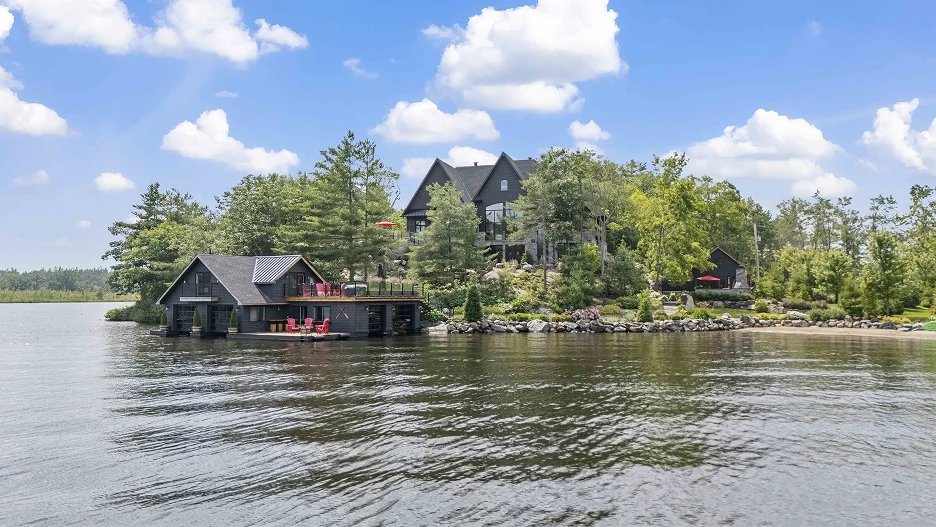
Winterization directly raises cottage values in Muskoka by expanding the buyer pool, extending the rental calendar, and reducing the risk of costly damage. A properly winterized cottage commands a measurable premium over a seasonal-only property on the same lake.
What Does Winterization Actually Mean for a Muskoka Cottage?
Winterization, in the context of Muskoka real estate, refers to the process of preparing and upgrading a cottage so it can be safely occupied, insured, and rented during cold-weather months. At its most basic, this means draining water lines, protecting plumbing from freezing, and securing the exterior before the property sits vacant through winter. At its most complete, it means converting a three-season cottage into a four-season property, one with adequate insulation, continuous heating, year-round road access, and systems that function in temperatures that regularly fall below -20C across Muskoka and Haliburton.
The distinction between a properly winterized cottage and one that is not affects far more than physical condition. It shapes how lenders appraise the property, how insurers underwrite it, how buyers compete for it, and how much income it can realistically generate as a rental income property. These downstream effects are what make winterization one of the most consequential capital decisions a Muskoka cottage owner can make.
How Does Winterization Affect Resale Value in Muskoka?
Winterization affects resale value in Muskoka by widening the pool of buyers who can purchase and use the property. A seasonal cottage limits its audience to buyers who want a summer retreat and nothing else. A four-season property attracts that same group plus retirees planning a primary residence transition, remote workers looking for year-round lakeside living, and investment buyers running the numbers on rental income. A larger buyer pool creates more competition, and more competition supports stronger pricing.
Royal LePage has confirmed that four-season cottages generally appeal to a broader range of buyers and that this broader market often contributes to stronger resale demand. At the market level in Muskoka, this premium is visible in pricing data. A winterized four-bedroom cottage on the Big Three lakes currently commands significantly higher per-square-foot values compared to equivalent seasonal properties, with the gap widening as buyers become more selective in the current market environment. The
Muskoka real estate price trends for 2026 confirm that high-quality, well-maintained waterfront properties with strong fundamentals are performing better than dated or seasonal-access-only properties.
Deferred winterization has the opposite effect. Properties with unresolved seasonal limitations, unpermitted additions, or ambiguous winter road access trade at a discount and take longer to sell.
What Is the Rental Income Impact of a Winterized Cottage?
A winterized cottage can access rental demand that a seasonal property cannot, and this directly increases annual income and the asset’s appraised income value. The Ontario short-term rental market runs year-round for properties that can accommodate it. Fall colour season draws couples and families to Muskoka and Haliburton for October weekends. Winter holidays, Family Day, and March Break create peaks that a four-season property can capture. A seasonal cottage that closes in October forfeits every one of those bookings.
Research from the Asset Protection Council and AirDNA data cited in industry analysis confirm that a short-term rental needs at least 60 to 70 percent annual occupancy to be genuinely profitable. A seasonal-only property concentrated in July and August cannot reliably reach that threshold. A properly winterized cottage that markets across four seasons can extend its active rental window significantly, improving income and strengthening the financial case for ownership.
CV Real Estate operates Cottage Vacations, a full-service rental management company across Ontario. This gives CV Real Estate access to verified occupancy data, not published estimates, which means buyers evaluating a property for rental income can see what comparable winterized properties actually earn across every season, not just what they might earn based on summer peaks alone.
Seasonal vs. Winterized Cottage: Value and Income Comparison
|
Factor |
Seasonal Cottage |
Winterized Cottage |
|
Buyer pool |
Seasonal users only |
Seasonal buyers, investors, retirees, remote workers |
|
Rental calendar |
May to October (peak) |
12 months including fall and winter holidays |
|
Insurance premiums |
Lower; vacancy clauses apply |
Higher; broader coverage options, fewer vacancy gaps |
|
Resale pricing |
Market value with limited demand |
Premium supported by larger buyer pool |
|
Days on market |
Longer in fall and winter |
Shorter; saleable in any season |
|
Pipe damage risk |
High if improperly closed |
Low with properly maintained systems |
|
STR occupancy potential |
60 to 70 days annually (peak weeks) |
Up to 180+ days with fall and winter demand |
What Are the Costs of Winterizing a Muskoka Cottage?
The cost of winterizing a Muskoka cottage ranges widely depending on the starting condition of the property and how complete the conversion needs to be. Basic seasonal closure, draining water lines and protecting plumbing, costs relatively little and is largely a maintenance task. A full four-season conversion, adding adequate wall and attic insulation, upgrading heating systems, replacing windows and doors, and ensuring year-round road access, can range from $50,000 for targeted upgrades to well over $200,000 for a comprehensive project on an older structure.
The financial case depends on what that investment returns. A cottage that earns an additional $15,000 to $30,000 in annual rental income because it can be rented in fall and winter recovers a significant portion of that cost within a few years. The same property also carries a higher resale value that reflects the improvement. Owners considering whether to invest should review the
costs of owning a rental cottage in full before deciding, since the income side of the equation requires realistic occupancy modelling, not optimistic peak-week projections.
Mid-range winterization targeting the highest-impact systems, insulation, heating redundancy, and water system protection, tends to offer the strongest return profile. Investors and owners who approach CV Real Estate for a buying call receive an assessment that draws on actual rental performance data from comparable properties, which removes the guesswork from that calculation.
How Do Muskoka STR Bylaws Affect the Value of a Winterized Cottage?
Winterization only creates income value if the property can legally operate as a short-term rental in its municipality. The Township of Muskoka Lakes, Huntsville, Gravenhurst, Bracebridge, and surrounding areas each apply different regulatory frameworks to short-term rental operations. Huntsville operates a Short-Term Rental Accommodation (STRA) Program requiring annual licensing, zoning compliance, proof of insurance, a waste disposal plan, and a 4 percent Municipal Accommodation Tax collected and remitted to the municipality. Properties in ineligible zones cannot obtain a license, and a winterized cottage that cannot rent legally captures none of the income value that winterization creates.
The Federation of Ontario Cottage Associations (FOCA) tracks regulatory changes across all Ontario cottage country municipalities, and the rules are still evolving. Buyers who assume that winterization automatically enables rental income without confirming STR eligibility first take on real regulatory risk. CV Real Estate runs address-level eligibility checks for buyers interested in income properties, reviewing zoning fit, licensing pathways, and realistic occupancy and rate modelling by season. This is not a service a general real estate agent can replicate, because it requires current knowledge of bylaw details that change township by township.
The data advantage that CV Real Estate brings through Cottage Vacations means buyers do not need to guess at occupancy rates. Properties managed by Cottage Vacations generate verified booking records across summer, fall, winter, and spring. Those records, reviewed with the context of what a specific winterized property could realistically generate, give buyers and sellers a more precise picture of what winter rental capability is actually worth. For those evaluating a property against rental regulations in Ontario, understanding the full bylaw picture before purchase is essential.
What Do Buyers Look for in a Winterized Muskoka Cottage?
Buyers evaluating a winterized Muskoka cottage look beyond the label. A listing that claims “four-season” without the supporting infrastructure does not perform like one. The features buyers and their agents verify before making offers include year-round municipal or well-maintained private road access, adequate insulation in walls, attic, and floors, reliable forced-air or radiant heating with a backup system, winterized water supply with confirmed protection against freezing, and properly sized propane or natural gas capacity for sustained cold-weather heating loads.
Buyers interested in operating an income property go further. They check STR licensing status and bylaw compliance, septic capacity relative to the bedroom count allowed under the township license, parking capacity adequate for licensed guest occupancy, and internet quality sufficient to attract remote workers during shoulder and off-peak seasons. Starlink and fibre availability has become an active factor in Muskoka cottage valuations as remote work demand continues to support winter rental bookings.
Properties that have all of these features in order sell faster and at higher prices. Properties that claim winterization but cannot document it attract lower offers and more conditional clauses. Buyers using CV Real Estate receive access to the
Try Before You Buy program, which allows prospective buyers to rent and stay at a property through Cottage Vacations before committing to purchase. For buyers assessing a winterized cottage, this is an opportunity to experience its winter systems and infrastructure firsthand before the transaction closes.
Thinking About Buying or Selling a Winterized Cottage?
The difference between a seasonal and a fully winterized cottage is not cosmetic. It is a financial distinction that affects appraised value, rental income, buyer competition, and days on market. CV Real Estate draws on verified rental performance data from Cottage Vacations to help buyers and sellers understand exactly what a winterized property is worth in today’s Muskoka market. To get a clear picture of how winterization affects the specific property you are considering, contact CV Real Estate and connect with a specialist who knows this market from both the rental and the real estate side.
Does Winterization Affect Cottage Insurance and Financing?
Winterization affects both cottage insurance and financing, in ways that most seasonal cottage owners do not anticipate until they encounter a claim or a financing condition. The Insurance Bureau of Canada notes that seasonal property insurance in Ontario is underwritten differently than standard home insurance, with vacancy clauses, flood considerations, and proximity to water all affecting premiums and coverage terms. A seasonal property that sits vacant from October through May faces vacancy clause restrictions that can limit or void coverage for certain types of damage during that period.
A winterized property that is actively occupied, managed, or rented year-round typically does not trigger the same vacancy clause concerns, although coverage terms vary by insurer and policy. This matters because the damage events most associated with Muskoka cottages, burst pipes, ice damming, structural stress from freeze-thaw cycles, and roof collapses under snow load, occur in winter. A property that is not properly winterized and not covered for winter vacancy losses is carrying uninsured financial risk that affects its appraised value and its attractiveness to lenders.
Financing is similarly affected. Lenders use MPAC assessments and comparable sales to evaluate waterfront properties, and a property with documented four-season capability and rental income history qualifies for different financing scenarios than a property without it. Buyers of income-generating winterized cottages may also access specific investment property financing structures. CV Real Estate works with buyers through all stages of the transaction, and a
cottage mortgage overview is available for buyers who want to understand the financing implications of winterized versus seasonal property purchases before making an offer.
What Winterization Means for Your Muskoka Cottage Investment
Winterization is not a maintenance expense. It is a value-creation decision. The properties that perform best in Muskoka’s current market are those with documented four-season capability, clear STR licensing status, verified rental income history, and physical systems that buyers can inspect and trust. Those properties attract more buyers, sell faster, and command premiums that reflect their broader usability.
The inverse is also true. Seasonal-only cottages that remain closed for five or six months per year are leaving income on the table, narrowing their future buyer pool, and absorbing winter damage risk that properly winterized properties largely avoid. The calculation is specific to each property and each owner’s goals, and getting it right requires access to real rental performance data, not published averages.
CV Real Estate is the only brokerage in Muskoka that operates an active rental management company across the region. That connection to Cottage Vacations means buyers and sellers receive advice grounded in how properties actually perform in every season, not just how they are listed. Whether you are evaluating a cottage investment or preparing a property for sale, a conversation with CV Real Estate starts with the data, not with assumptions.
Ready to Understand What Your Cottage Is Worth?
Whether you own a seasonal cottage you are considering upgrading, a winterized property you are ready to sell, or you are searching for an income property with year-round rental potential, CV Real Estate brings a level of market knowledge that general brokerages cannot match. Our team draws on verified booking data from Cottage Vacations to give buyers and sellers an honest picture of winterized property value in Muskoka today. Contact CV Real Estate to connect with a specialist and start a conversation grounded in what the market is actually doing.
Frequently Asked Questions
1. Does winterizing a Muskoka cottage increase its resale value?
Yes, winterizing a Muskoka cottage increases its resale value by widening the buyer pool and reducing the risk of physical damage during vacancy. A four-season property attracts investors, retirees, and remote workers in addition to seasonal buyers, and broader buyer competition supports higher pricing. Properties with documented winterization and year-round usability sell faster and at measurable premiums compared to seasonal-only properties on comparable lakes. For a current assessment of how this applies to Muskoka waterfront specifically, the Muskoka market review provides context on where the premium is strongest.
2. How much does it cost to fully winterize a cottage in Ontario?
The cost to fully winterize a cottage in Ontario ranges from approximately $50,000 for targeted upgrades, such as insulation, heating system improvements, and window replacements, to over $200,000 for a complete four-season conversion of an older seasonal structure. The return on that investment depends on rental income potential and resale premium. A cottage that gains $20,000 or more in annual rental income from winter and fall bookings typically recovers a significant portion of the conversion cost within a few years. An honest income model requires realistic occupancy projections, which is why working with a specialist who manages rental properties directly matters. See also costs of owning a rental cottage for a full breakdown of ongoing ownership expenses.
3. Can I rent my Muskoka cottage in winter legally?
Whether you can legally rent your Muskoka cottage in winter depends on your municipality’s short-term rental regulations and your property’s compliance status. Huntsville, the Township of Muskoka Lakes, Bracebridge, and Gravenhurst each apply different STR licensing requirements, including zoning eligibility, annual license fees, insurance documentation, and Municipal Accommodation Tax collection and remittance. A winterized property cannot generate legal rental income in winter if it does not hold a valid STR license. CV Real Estate conducts address-level eligibility reviews for buyers and owners assessing income potential. For the current bylaw landscape, rental regulations affecting cottage values across Ontario provides a detailed breakdown.
4. What is the difference between a seasonal and a winterized cottage for a buyer?
For a buyer, the difference between a seasonal and a winterized cottage is the range of uses the property supports, the income it can generate, and the price it commands. A seasonal cottage is designed for warm-weather occupancy and requires closure from October through April. A winterized cottage has insulation, heating, and water systems that support year-round use, which means it can serve as a rental, a remote work base, or a retirement property in addition to a summer retreat. Buyers evaluating cottages for income should focus on four-season properties. The Try Before You Buy program offered through CV Real Estate allows prospective buyers to rent and experience a property in person before committing to a purchase.
5. Does a winterized cottage need special insurance in Muskoka?
A winterized cottage that is actively occupied or rented year-round typically qualifies for broader insurance coverage than a seasonal property that sits vacant for months. The Insurance Bureau of Canada notes that cottage insurance in Ontario includes vacancy clause restrictions that can limit coverage during extended unoccupied periods. A properly winterized cottage managed through an active rental program or regularly used in winter avoids those restrictions. Insurers also require documentation of winterized systems, such as maintained heating, working pipes, and smoke and carbon monoxide detection. Buyers and owners should confirm coverage details with their broker. For a broader look at investment considerations, cottage investment vs condo covers how these factors compare across property types.
6. How does CV Real Estate use rental data to value winterized cottages?
CV Real Estate is the only Muskoka brokerage that operates a sister rental management company, Cottage Vacations, which manages active properties across Ontario cottage country. This gives CV Real Estate access to verified occupancy records, seasonal rate data, and real booking patterns across every time of year, including fall and winter periods that other brokerages cannot accurately model. When a buyer is evaluating a winterized cottage for income potential, CV Real Estate can reference how comparable properties perform across all four seasons, not just in peak summer weeks. This data advantage is what makes the assessment reliable. For more on how that rental data shapes investment decisions, CV Real Estate rental data advantage explains the model in detail.
Key Takeaways
- Winterization expands the buyer pool: A four-season Muskoka cottage attracts investors, retirees, and remote workers in addition to seasonal buyers, and broader demand supports stronger resale pricing.
- Seasonal cottages leave rental income uncaptured: A property that closes in October forfeits fall colour season, winter holiday bookings, Family Day, and March Break, reducing total annual occupancy well below the 60 to 70 percent threshold needed for strong rental profitability.
- STR licensing eligibility determines whether winterization creates income value: A winterized cottage that cannot legally operate as a short-term rental in its township cannot capture winter rental income regardless of its physical condition.
- Insurance and financing are directly affected: Properly winterized properties avoid vacancy clause restrictions that can limit coverage during extended seasonal closure, and documented four-season status supports stronger financing positions.
- Verified rental data is the only accurate way to model winter income: Published averages do not reflect property-specific seasonal performance. CV Real Estate draws on actual Cottage Vacations booking records to give buyers and sellers a reliable income picture across all four seasons.

Meet The Team
We’re cottage country enthusiasts and vacation property experts, helping renters, buyers, and sellers reach their goals for more than 20 years.