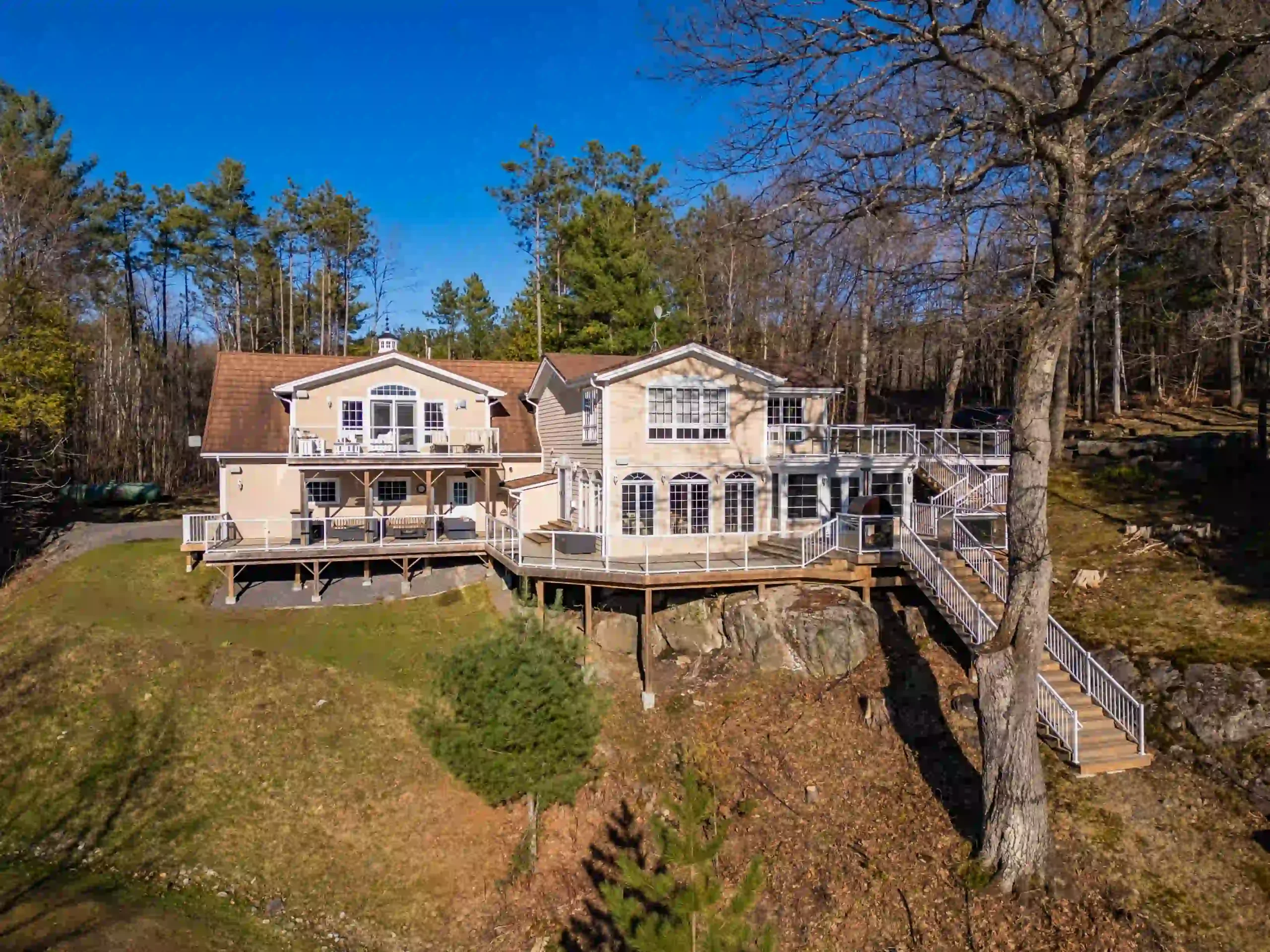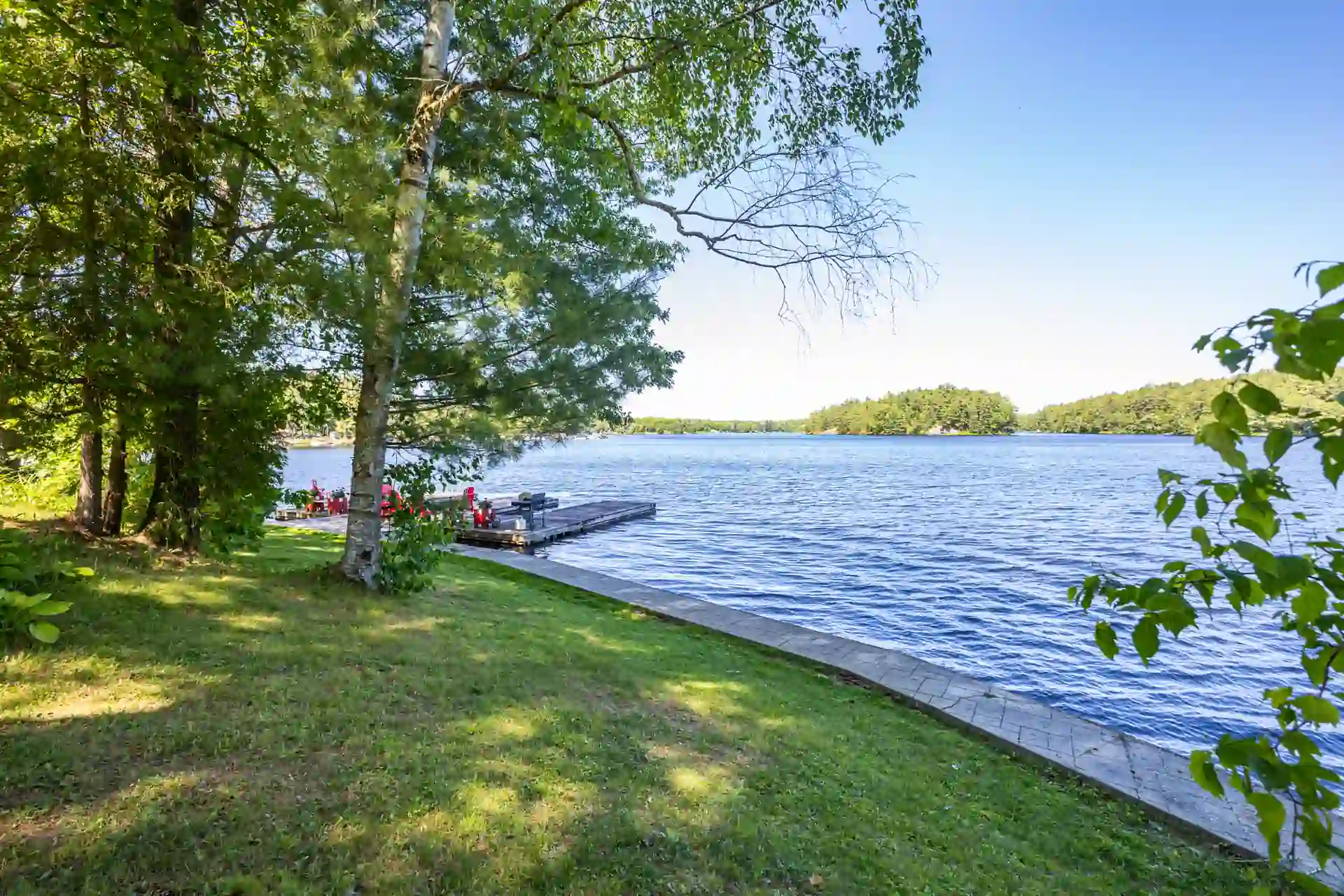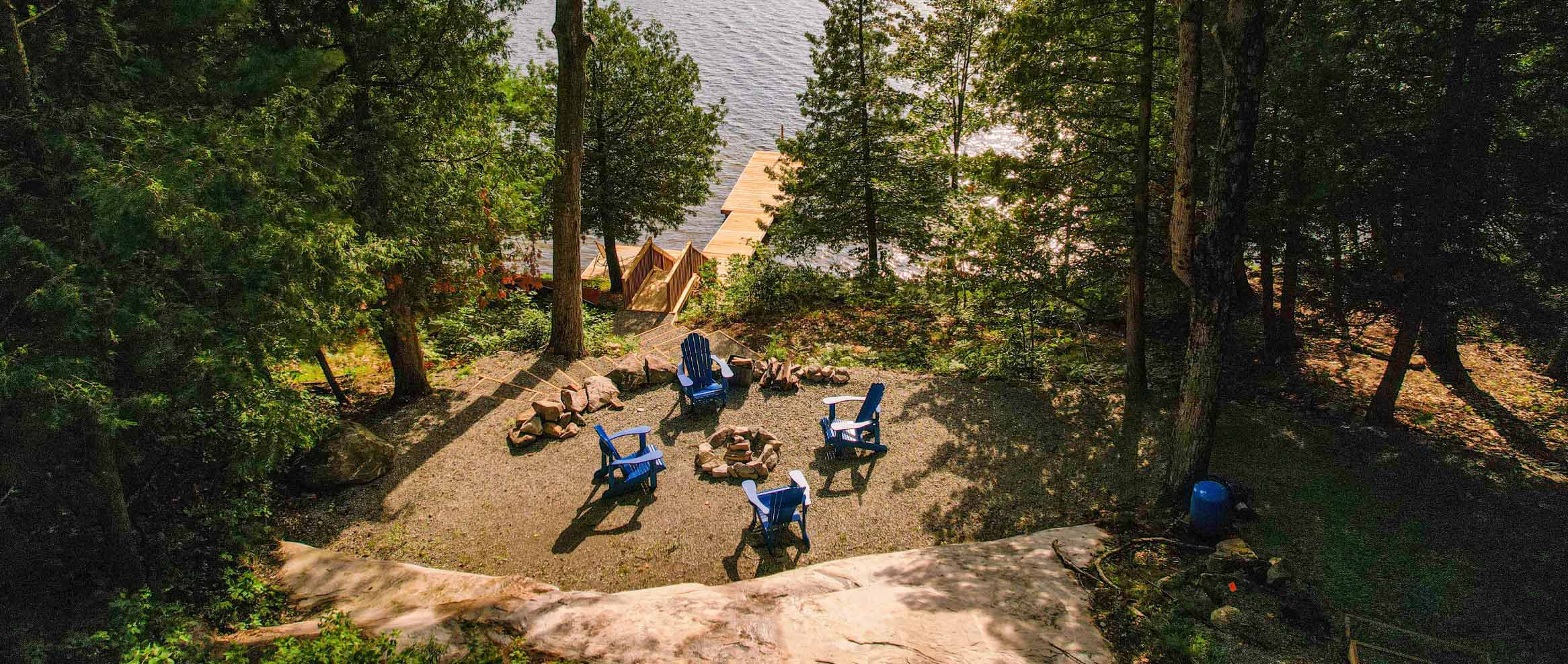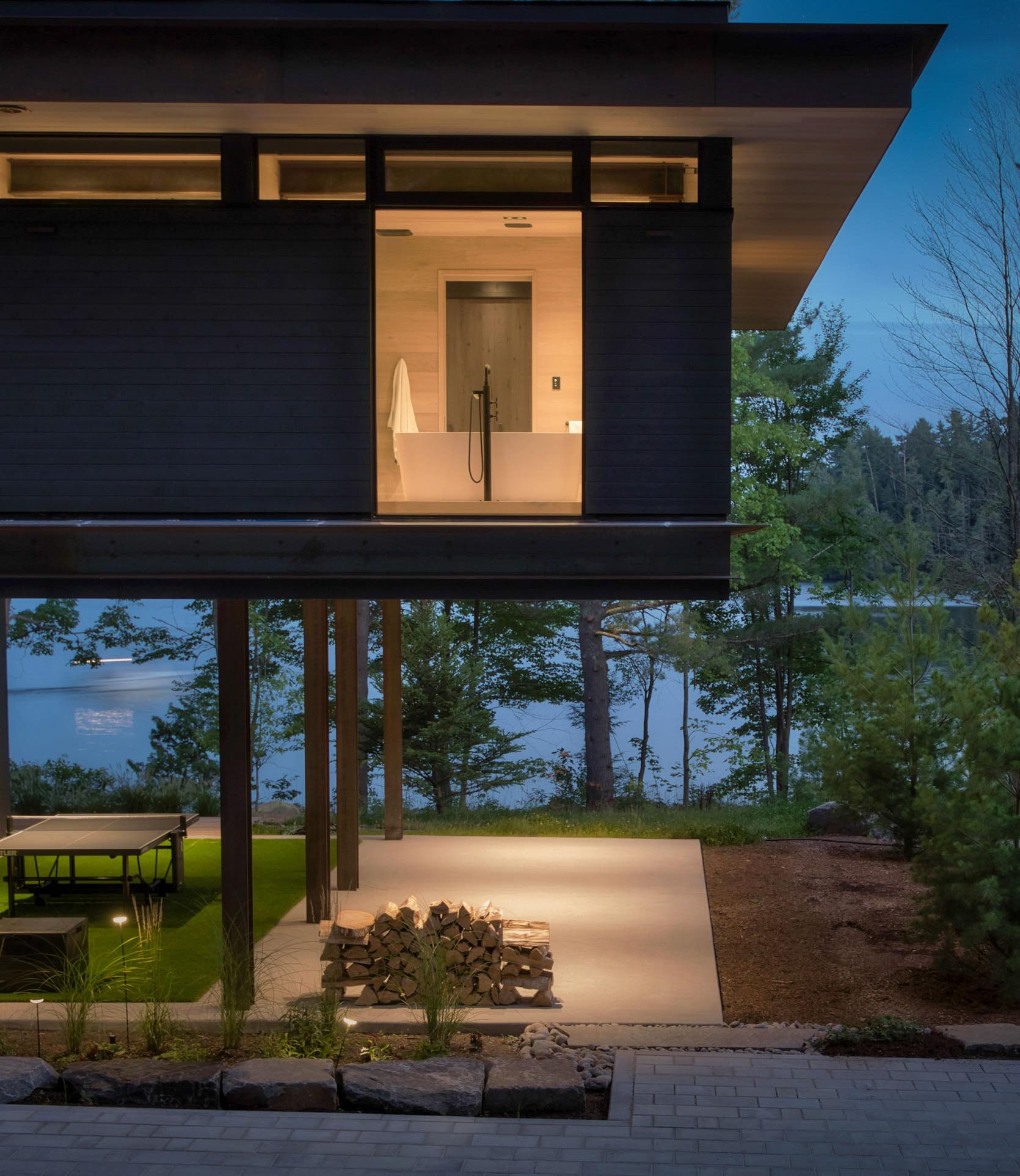
Waterfront frontage is one of the most direct and consistently measurable drivers of cottage property value in Ontario. More frontage generally means greater privacy, more usable shoreline, and stronger buyer demand, all of which support higher prices. However, the relationship between frontage and value is nuanced and depends on lake quality, frontage shape, land depth, and local zoning.
Why Does Waterfront Frontage Matter So Much in Ontario Cottage Real Estate?
Frontage is the length of a property measured along the waterline. In Ontario cottage country, it is the single attribute that most directly reflects what a buyer is purchasing when they acquire a waterfront property. The experience of being on the water, the ability to place a dock, the visual privacy from neighbours, and the sense of space all flow from the amount of frontage a property holds.
Unlike structural improvements that can be replaced or renovated, frontage is fixed. A cottage with 150 feet of lakefront cannot be expanded to 300 feet regardless of how much money is invested in the property. This permanence gives frontage a scarcity value that improvements, furnishings, and even the cottage structure itself simply cannot replicate. When a property with exceptional frontage comes to market in Muskoka, Haliburton, the Kawarthas, or anywhere in Ontario cottage country, buyers who understand the market respond accordingly.
The CV Real Estate team works with buyers and sellers across Ontario’s waterfront markets, where frontage plays a central role in property valuation and negotiation. Sellers seeking a current assessment of how their frontage affects their property’s market position can book a selling call to discuss specifics with the team.
How Do Appraisers Calculate the Value of Waterfront Frontage?
Certified appraisers designated by the Appraisal Institute of Canada use a methodology called the frontage rate or price-per-foot-of-frontage to establish a baseline value for the waterfront component of a cottage property. This rate is derived from analysing recent comparable sales in the same lake or market area, identifying properties with known frontage measurements, and calculating the implied value per foot of waterfront from those transactions.
The frontage rate is not applied uniformly across all properties. Adjustments are made based on the shape and usability of the frontage, the presence or absence of a natural sand bottom, the depth of the lot behind the waterline, the existence of a dock or boathouse, environmental restrictions on shoreline alteration, and the quality of the water directly in front of the property. Two properties with identical frontage measurements on the same lake can have significantly different appraised values when these qualitative factors are considered.
In Muskoka specifically, the premium for waterfront frontage on the most prestigious lakes reflects the concentrated demand from high-net-worth buyers competing for a genuinely limited supply of available shoreline. Price-per-foot rates on Lake Rosseau and Lake Joseph are substantially higher than comparable rates on smaller or less recognized lakes, even when raw lake quality is similar.
What Is Considered Good Waterfront Frontage in Ontario?
Frontage Length
In Ontario cottage country, properties with fewer than 100 feet of frontage are considered relatively tight. A property in the 100 to 150 foot range is broadly acceptable for a single-family cottage use with adequate privacy and dock space. Properties with 150 to 250 feet or more are considered well-fronted and command a meaningful premium. Properties above 250 feet of genuine waterfront are rare in established markets and attract the strongest buyer interest when they come to the market.
Frontage Shape and Usability
Straight, unobstructed frontage along an open section of lake provides the most usable waterline. Frontage that is broken by rocky outcroppings, wetland vegetation, irregular curves, or waterway restrictions may be technically longer but practically less usable than a shorter section of clean, accessible shoreline. Appraisers assess the quality of the frontage alongside its quantity, and buyers should do the same.
Shore Bottom and Water Depth
The character of the shore bottom immediately in front of the property significantly affects its usability and value. A natural sand or gravel bottom with gradual depth progression is highly desirable for swimming and creates an accessible entry point for both children and adults. A rocky shore bottom can be visually attractive but is less practical for wading. Weedy or mucky bottoms reduce the swimming experience and carry a negative impact on value relative to a comparable property with clean waterfront access.
Sun Exposure and Orientation
The direction a property faces relative to the sun affects how much sunlight reaches the waterfront and dock during the most desirable afternoon hours. West-facing properties receive afternoon and evening sun directly at the waterfront, which is strongly preferred by buyers who use their cottages for social entertaining and sunset viewing. South and southwest exposures are also desirable. North-facing properties receive limited direct waterfront sun and typically carry a lower price relative to comparable west or south-facing properties on the same lake.
Does More Frontage Always Mean Higher Value?
More frontage generally supports higher value, but the relationship is not simply linear. The incremental value of additional frontage diminishes beyond a certain threshold for most buyers and property types. A property moving from 80 feet to 150 feet of frontage gains significant practical usability and privacy. A property moving from 250 feet to 400 feet of frontage gains additional prestige and visual space, but the incremental practical benefit for a single-family cottage is less compelling than the first jump.
Frontage also needs to be considered in relation to the total depth of the lot. A property with 200 feet of frontage and only 100 feet of depth behind the waterline may actually be less functional and valuable than a property with 150 feet of frontage and 300 feet of depth, which provides room for a well-set-back cottage, natural buffer zones, and future improvement possibilities. Ontario shoreline setback regulations, administered under the various municipalities’ zoning bylaws and the Ontario Building Code, restrict how close structures can be built to the water, making lot depth a practical constraint for any new build or major renovation.
How Do Zoning Regulations Affect the Value of Waterfront Frontage in Ontario?
Municipal zoning bylaws in Ontario cottage country regulate minimum frontage requirements, setback distances from the waterline, maximum lot coverage, and shoreline buffer zones. These regulations affect how a buyer can actually use the frontage they are purchasing, and in some cases significantly constrain what is permissible even on a well-fronted property.
Conservation Authorities and similar provincial and regional bodies also influence what landowners can do with their shoreline through stewardship programs, permit requirements for dock modifications, and restrictions on the removal of shoreline vegetation. Under the federal Fisheries Act, no one may carry out works, undertakings, or activities in or near water that result in the harmful alteration, disruption, or destruction of fish habitat without authorization from Fisheries and Oceans Canada. Buyers who plan to alter the shoreline, expand dock structures, or build boathouses must confirm the applicable permits and restrictions before assuming that a given frontage configuration can be modified.
Properties on Muskoka’s most prominent lakes are also subject to provincial policies under the Crown Land Act and various Lake Management Plans that govern development near sensitive shoreline environments. Buyers of high-frontage waterfront properties can review the featured listings at CV Real Estate to see how frontage is represented and described in current active listings across Ontario’s cottage markets.
Does Waterfront Frontage Affect Rental Income Potential?
Waterfront frontage has a direct impact on short-term rental income potential for cottage properties where rentals are permitted. Renters choosing between properties on the same lake consistently favour properties with wider frontage, more dock space, better swimming access, and greater privacy from neighbouring rentals. These are all characteristics that increase with frontage quantity and quality.
Well-fronted properties in competitive short-term rental markets such as Muskoka, the Kawarthas, and Haliburton tend to command higher nightly or weekly rental rates than comparably sized cottages with limited frontage. This income advantage compounds the value of frontage for investor-oriented buyers by improving both the annual rental yield and the long-term appreciation potential of the property.
Buyers interested in the rental income dimension of waterfront ownership can explore the income property expertise at CV Real Estate for additional guidance on how frontage, location, and property characteristics interact with rental market performance.
Waterfront Frontage as a Long-Term Value Anchor
Of all the attributes that define a waterfront cottage’s value, frontage is among the most durable over time. Structures age and require updating. Interior finishes become dated. Mechanical systems need replacement. But the physical shoreline of a well-fronted property does not diminish in the way that a structure does. Buyers who prioritize frontage as the foundation of their cottage purchase are building on an attribute that sustains value across multiple real estate cycles.
Sellers with properties that carry strong frontage attributes, whether in terms of length, shape, sun exposure, or shoreline character, should ensure these characteristics are clearly and accurately represented in their marketing materials. Buyers who understand the market will pay a premium for genuine frontage quality, and underselling this attribute leaves money on the table.
CV Real Estate brings expert waterfront property knowledge to both buyers and sellers across Ontario cottage country. To discuss how your property’s frontage affects its current market value, book a selling call or connect with the team for a detailed conversation.
Talk to CV Real Estate About Your Waterfront Property
CV Real Estate provides specialized knowledge and market expertise for Ontario waterfront cottage transactions. Whether you are evaluating a property’s frontage characteristics or preparing to sell a well-fronted waterfront cottage, book a buying call or book a selling call with the team today.
Frequently Asked Questions
1. How much is a foot of waterfront frontage worth in Muskoka?
The price per foot of waterfront frontage in Muskoka varies significantly by lake, location on the lake, and the quality of the frontage itself. On the most prestigious sections of Lake Rosseau and Lake Joseph, frontage rates have historically reached several thousand dollars per foot or more in strong market conditions. On smaller or less recognized Muskoka lakes, the rate per foot is lower but still reflects the premium associated with the region. A certified appraisal from a Muskoka-specialist appraiser is the most reliable way to establish the current frontage value for a specific property. Our comparison of Lake Joseph vs Lake Rosseau in Muskoka provides useful context on how lake prestige drives frontage premiums.
2. Does the shape of my shoreline affect how frontage is measured?
Frontage is typically measured as the straight-line distance along the waterline of the property, though some assessments use the actual shoreline measurement which can be longer if the shoreline is irregular. The practical usability of the frontage, including whether it is accessible for swimming, docking, and recreational use, is assessed separately and affects the overall quality adjustment applied in the appraisal process. Understanding riparian rights and shoreline ownership in Ontario clarifies what you legally own and control along your waterfront boundary.
3. Is 100 feet of waterfront frontage enough for a cottage in Ontario?
One hundred feet of waterfront frontage is a functional baseline for a private cottage experience on most Ontario lakes, providing enough space for a dock and comfortable separation from neighbours. For buyers who prioritize privacy or plan to install larger dock structures or boathouses, 150 feet or more is preferable. On lakes with significant traffic or where neighbouring properties are closely spaced, additional frontage provides meaningfully greater comfort and privacy. Our guide to waterfront versus water access cottages in Ontario explains how access type and frontage interact to shape overall property value.
4. Does a private dock add value beyond the frontage itself?
A permitted, well-constructed private dock adds value independent of the frontage measurement by providing practical water access that is immediately usable. The value contribution of a dock varies based on the dock’s size, condition, permits, and the type of dock, whether it is floating, fixed pier, or a combination. A boathouse, particularly one with legal boat storage above, adds significant additional value in Muskoka and other premium Ontario cottage markets. Review our guide on dock permits for Ontario cottages before purchasing any property where dock work is planned or anticipated.
5. Are there restrictions on how I can use my waterfront frontage in Ontario?
Yes. Ontario waterfront property owners are subject to federal Fisheries Act provisions, provincial Conservation Authority regulations, and municipal zoning bylaws that govern activities along and within the shoreline and water. Dock construction, vegetation removal, shoreline grading, and boathouse construction all typically require permits. Restrictions vary by municipality, Conservation Authority jurisdiction, and the specific environmental sensitivity of the shoreline. Buyers should confirm all applicable restrictions before purchasing a property where shoreline alterations are planned. Our overview of cottage inspection and due diligence in Ontario outlines what to verify before any waterfront purchase.
Key Takeaways
- Waterfront frontage is one of the most permanent and consistently valued attributes of any Ontario cottage property, as it cannot be increased or manufactured regardless of investment in improvements.
- Appraisers use price-per-foot-of-frontage rates derived from comparable sales, adjusted for frontage shape, shore bottom quality, sun exposure, depth, and usability.
- Properties with 150 feet or more of clean, accessible waterfront frontage command a meaningful premium over comparable cottages with minimal or lower-quality frontage.
- The value of frontage is not purely linear. The incremental benefit diminishes at very high frontage levels, and frontage must be assessed in combination with lot depth, sun exposure, and shoreline character.
- Ontario waterfront frontage is subject to regulatory constraints from multiple levels of government, including federal fisheries law, Conservation Authority permits, and municipal zoning bylaws.
- Well-fronted waterfront properties consistently outperform in short-term rental markets and have demonstrated stronger long-term value retention than properties with limited or marginal frontage.

Meet The Team
We’re cottage country enthusiasts and vacation property experts, helping renters, buyers, and sellers reach their goals for more than 20 years.