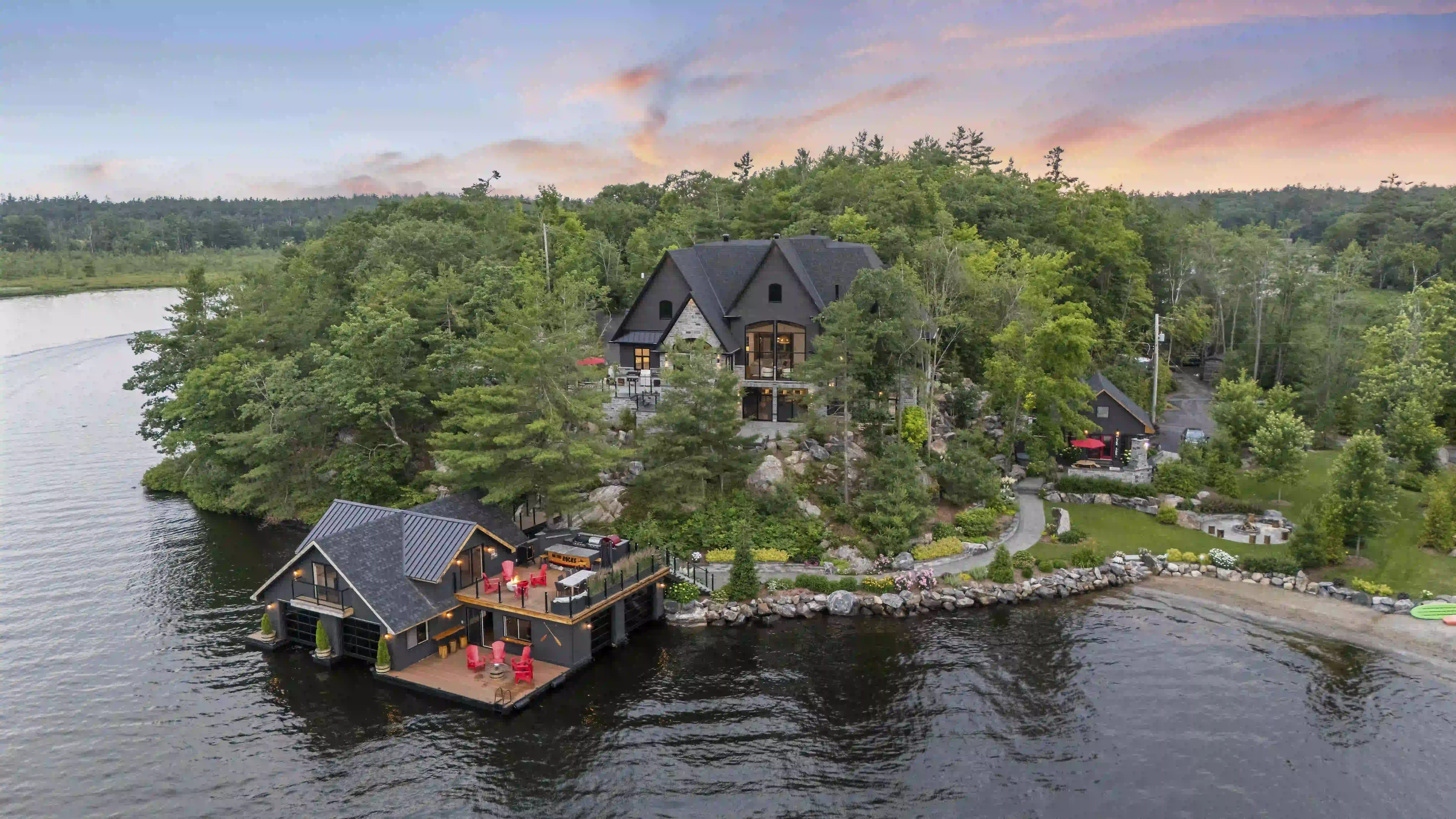
Waterfront market strength in 2026 depends on what you are measuring. For price appreciation, Atlantic Canada leads Canada. For supply scarcity and long-term value protection, Muskoka’s Big Three lakes lead Ontario. For affordability combined with genuine lifestyle quality, Haliburton and the Kawarthas offer the best entry points in cottage country. For lifestyle without compromise, British Columbia’s coastal markets and Prince Edward Island’s shoreline communities deliver distinct appeal. This guide ranks and explains each region’s position so buyers and investors can match market strength to their specific goals.
What Does “Market Strength” Mean for Waterfront Property in 2026?
Waterfront market strength is not a single measurement. A market can be strong in one dimension and weak in another, and conflating them produces bad decisions. A region with rising prices may also have rising inventory and falling sales volume, meaning the price gain is fragile. A region with falling prices may have the most constrained supply of any market in the country, meaning the correction is temporary and the long-term hold is sound. Buyers and investors who understand which dimension of strength matters most to their specific situation make better decisions than those who chase a headline number.
For this guide, waterfront market strength is assessed across four dimensions: price trajectory (what prices have done recently and where they are forecast to go), supply constraint (how limited the inventory is structurally, not just cyclically), buyer demand profile (who is buying and how motivated they are), and lifestyle infrastructure (the year-round amenities, access, and services that support extended or permanent occupancy). Each region below is assessed against all four. CV Real Estate tracks these dynamics specifically across Ontario cottage country for buyers who want property-level analysis rather than a regional summary. The cottage investment guide provides investment-specific context for Ontario buyers.
Which Ontario Waterfront Region Is the Strongest for Buyers in 2026?
Within Ontario, three distinct waterfront market tiers exist in 2026, each with a different strength profile.
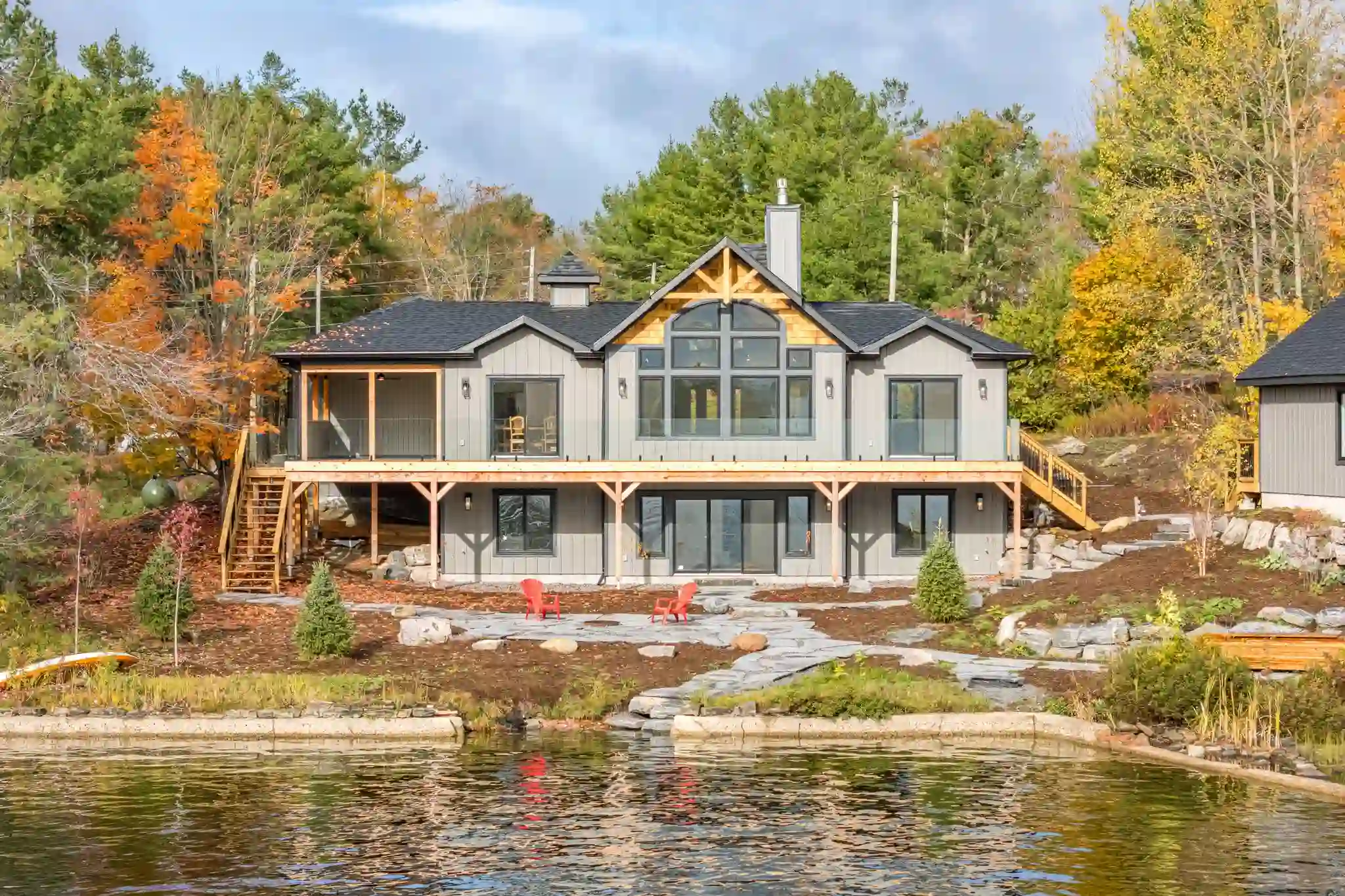
Muskoka’s Big Three lakes, Lake Joseph, Lake Rosseau, and Lake Muskoka, represent the strongest market for long-term value protection and supply scarcity. Approximately 1,250 shoreline properties exist on Lake Joseph, the fewest of the three, with predominantly multigenerational ownership that keeps new listings rare even in a slow market. Average waterfront pricing on the Big Three sat above $3 million as of early 2026, with Lake Joseph and Lake Rosseau averaging closer to $4.1 million. The correction from the 2022 peak has been more modest here than in the broader cottage market: months of supply on the Big Three remain lower than on smaller Muskoka lakes, and the buyer profile, high-net-worth, long-horizon, rate-insensitive, keeps demand more resilient, a resilience consistent with the interest rate stabilization tracked by the Bank of Canada. For buyers with a 7 to 10-year horizon and the capital to participate in this tier, the Big Three represent Ontario’s strongest long-term waterfront hold.
The broader Muskoka waterfront, which includes hundreds of smaller and interior lakes, sits at the mid-tier of market strength. The median Muskoka waterfront price was approximately $950,000 in May 2026, down from a 2022 peak of $1.235 million. Months of supply reached 17.5, well above the 10-year average of 7.4 months. This segment is in correction, which makes it interesting for patient buyers but challenging for sellers who need to move in 2026. The entry-level segment under $1.2 million has the most inventory and the most negotiating room of any point since before the pandemic. For buyers who want a Muskoka address without Big Three pricing, this segment offers the most opportunity in the current market.
Haliburton is Ontario’s strongest waterfront market for value-to-quality ratio. Typical waterfront pricing between $400,000 and $550,000 makes it the most affordable major cottage lake region in the province, and the inventory surge from the pandemic-era correction has given buyers genuine choice. The region’s proximity to the GTA via Highway 35, its reputation for rugged Shield beauty, and its growing appeal among younger family buyers position it for gradual appreciation as Muskoka pricing pushes a demographic of buyers to look east. For first-time cottage buyers or those with a sub-$700,000 budget for waterfront, Haliburton is the strongest Ontario market in 2026. The Haliburton vs Muskoka guide frames the comparison in detail.
Where Else in Ontario Is the Waterfront Market Performing Well?
Georgian Bay’s four-season corridor, anchored by Collingwood and the Blue Mountains, is recovering faster than the seasonal island properties of Honey Harbour and the more remote Georgian Bay areas. Collingwood benefits from ski season demand in winter, summer waterfront appeal, a strong dining and lifestyle scene, and highway access that makes it viable as a primary residence for GTA commuters. The luxury segment between $2 million and $2.5 million saw meaningfully more activity in early 2026 than the same period in 2025. For buyers who want a four-season waterfront lifestyle within two hours of Toronto, the Collingwood-Blue Mountains area is one of Ontario’s more resilient markets in 2026.
The Kawarthas, anchored by the Kawartha Lakes municipality and extending through the Trent-Severn Waterway corridor, are performing as one of Ontario’s highest-volume recreational markets in 2026. Transaction activity is strong relative to other cottage regions, prices have stabilized below their pandemic peak, and the region’s improved broadband connectivity has driven hybrid-worker demand. Entry-level waterfront in the Kawarthas can be found well below $600,000 in many areas, and the accessibility from the GTA, typically 90 minutes to two hours, supports both weekend use and permanent relocation for remote workers. The Kawarthas community page outlines the region further.
|
Ontario Region |
Price Range (Waterfront) |
Market Strength Driver |
2026 Buyer Positioning |
|
Muskoka Big Three |
$3M – $4.1M+ |
Structural scarcity; HNW buyer base |
Strong long-term hold; limited negotiating room |
|
Broader Muskoka |
$700K – $2M typical |
Correction creating opportunity |
Best negotiating window since pre-pandemic |
|
Haliburton |
$400K – $550K |
Affordability + Shield lifestyle |
Best value market in Ontario cottage country |
|
Georgian Bay (Collingwood) |
$1M – $3M+ |
Four-season lifestyle; luxury recovery |
Selective recovery; quality properties moving |
|
Kawarthas |
$400K – $900K |
High volume, hybrid-worker demand |
Stable; good selection and access |
Which Canadian Regions Outside Ontario Have the Strongest Waterfront Markets?
Atlantic Canada produced the most striking waterfront market performance in Canada in 2025 and carries the strongest forward momentum into 2026. The weighted median price of a waterfront single-family home in Atlantic Canada rose 10.1 percent in 2025 to $354,100, the highest year-over-year gain of any Canadian region, according to Royal LePage data. Single-family recreational homes across Atlantic Canada as a whole rose 11.8 percent in 2025, also a national high.
The primary driver is interprovincial migration from Ontario and British Columbia, where comparable waterfront properties cost three to ten times more, a pattern that shows up in Statistics Canada’s interprovincial migration data. A buyer who cannot afford Lake Rosseau at $4 million can afford a Nova Scotia oceanfront property at $600,000 to $800,000 and receive a genuine four-season coastal lifestyle. Nova Scotia’s South Shore, particularly around the Village of Chester, represents Atlantic Canada’s most prestigious waterfront enclave, with properties regularly exceeding $1 million and the highest concentration of high-end listings in the province. The South Shore has seen sustained out-of-province buyer interest and supply constraints that have kept it among the most competitive segments in Atlantic Canada even as other regional markets moderated. Buyers relocating to the province can find general provincial resources through the Government of Nova Scotia.
Prince Edward Island’s waterfront market is characterized by limited supply and balanced to slightly buyer-friendly conditions in 2026 following tariff-related economic uncertainty. PEI offers some of Canada’s most distinctive coastal landscapes at price points well below Ontario waterfront, and a growing number of buyers are considering PEI waterfront as a primary residence rather than a seasonal retreat, driven by lifestyle appeal and broadband improvements. Provincial property and residency information is available through the Government of Prince Edward Island.
New Brunswick’s Saint John stands out within Atlantic Canada for extremely low waterfront inventory that has sustained competitive conditions even as broader Atlantic markets softened slightly. Moncton, New Brunswick, is one of Atlantic Canada’s fastest-growing cities and supports a waterfront market that benefits from strong local employment and population growth.
How Does Manitoba, Saskatchewan, and BC Fit the National Picture?
Manitoba and Saskatchewan are forecast to lead Canada in recreational property price appreciation in 2026, with 5.5 percent growth projected, according to Royal LePage. The driver is resource-sector economic confidence and the relative affordability of lake-country properties in these provinces compared to Ontario and British Columbia. Prairie lake properties in established cottage regions around lakes Winnipeg, Manitoba, and Waskesiu offer genuine recreational waterfront at price points well below any Ontario or BC equivalent. For buyers open to prairie lake country, the combination of affordability and projected appreciation makes this one of the strongest value markets in Canada in 2026.
British Columbia’s coastal and waterfront markets are mixed. The Lower Mainland’s weakness in urban real estate has weighed on recreational and waterfront properties in adjacent regions, and BC waterfront broadly underperformed the national recreational market in 2025. However, Victoria and Vancouver Island’s waterfront neighbourhoods, particularly Oak Bay and the Gulf Islands, have maintained stronger demand than the province’s broader market average. BC coastal waterfront in the right location and at the right price point represents a strong long-term hold, but buyers entering in 2026 should do so with a clear-eyed understanding of provincial regulatory context, particularly around short-term rental rules, which have become among the most restrictive in Canada following provincial STR legislation.
What Factors Make a Waterfront Region Strong Long-Term?
Across all markets, the waterfront regions that produce the strongest long-term outcomes share four structural characteristics. Supply constraints that are not correctable, meaning the shoreline cannot be extended, development setbacks prevent new lakefront construction, and ownership patterns are predominantly long-term, create markets where demand periodically cycles but supply never materially increases. The Big Three Muskoka lakes, Nova Scotia’s South Shore, and select Gulf Islands communities share this characteristic.
Demand from outside the local economy is the second structural strength driver. Waterfront regions whose buyer base extends to GTA buyers, American buyers, or interprovincial migrants from higher-cost markets are protected from purely local economic cycles. Muskoka, Atlantic Canada, and Georgian Bay all benefit from broad buyer bases that insulate them from regional economic weakness.
Year-round lifestyle infrastructure has become a third structural driver since 2020. Regions where properties can be used 12 months a year, where internet connectivity supports remote work, where roads are maintained in winter, and where local commercial services extend beyond the summer season have outperformed strictly seasonal markets in appreciation and holding period utility. This is why Collingwood outperforms Honey Harbour within Georgian Bay, and why year-round accessible Muskoka properties command a premium over seasonal ones on the same lake.
CV Real Estate evaluates all four of these structural factors for buyers considering Ontario cottage country acquisitions, drawing on Cottage Vacations rental data to add the rental market dimension to the analysis. The income property expertise the team brings to every transaction reflects this multi-factor framework.
Which Waterfront Market Is Right for Your Goals in 2026?
The strongest waterfront market for you is the one that best aligns with your specific combination of budget, time horizon, intended use, and tolerance for market risk. Atlantic Canada offers the best price appreciation trajectory and the most accessible entry point for buyers priced out of Ontario. Muskoka’s Big Three offer the strongest long-term supply scarcity and value protection for buyers with the capital to participate. Haliburton offers the best value in Ontario cottage country for buyers prioritizing lake lifestyle over prestige address. Prairie lake country offers the highest projected appreciation rate for buyers open to non-Ontario waterfront. BC coastal offers long-term lifestyle and prestige for buyers in that market who are positioned correctly.
No market is uniformly strong for every buyer. The analysis has to start with your goals. CV Real Estate provides that analysis for Ontario cottage country buyers and sellers, grounded in actual market data and rental performance from Cottage Vacations. Contact the team through a buying call to discuss which Ontario waterfront region best matches what you are looking for.
Frequently Asked Questions About Waterfront Market Strength
1. Which Canadian region had the highest waterfront price appreciation in 2025?
Atlantic Canada recorded the highest waterfront price appreciation of any Canadian region in 2025. The weighted median price of a waterfront single-family home in Atlantic Canada rose 10.1 percent to $354,100, according to Royal LePage data. Single-family recreational homes across Atlantic Canada as a whole rose 11.8 percent, also the highest national figure. The primary drivers are interprovincial migration from higher-cost provinces and genuinely constrained coastal supply in key markets like Nova Scotia’s South Shore and Newfoundland. Manitoba and Saskatchewan are forecast to lead Canadian recreational property price appreciation in 2026 at 5.5 percent. For Ontario-specific waterfront data, the cottage prices resource is the most detailed reference.
2. Is Muskoka still a strong waterfront market in 2026 despite the correction?
Muskoka’s Big Three lakes (Lake Joseph, Lake Rosseau, and Lake Muskoka) remain strong long-term waterfront markets in 2026 despite the broader correction, because their strength is structural rather than cyclical. Supply on these lakes is genuinely constrained by geography and multigenerational ownership patterns, and the buyer profile is high-net-worth and long-horizon, which insulates demand from interest rate sensitivity. The correction has been more modest on the Big Three than on smaller or interior Muskoka lakes. The broader Muskoka market has corrected more significantly and represents a genuine buyer opportunity, particularly in the sub-$1.2 million segment. More detail is in the Muskoka market review on the site.
3. Which Ontario waterfront region offers the best value for buyers in 2026?
Haliburton offers the strongest value-to-quality ratio for waterfront buyers in Ontario in 2026. Typical waterfront pricing between $400,000 and $550,000 makes it the most affordable major cottage lake region in the province, with genuine Canadian Shield landscape and strong recreational access. The region’s inventory surge from the correction has created buyer-friendly conditions with real choice and negotiating room. For first-time cottage buyers or those whose budget is under $700,000 for waterfront, Haliburton is the strongest Ontario market available. The Haliburton vs Muskoka guide compares both markets in detail.
4. Is Georgian Bay a strong waterfront market for buyers in 2026?
Georgian Bay’s four-season corridor, particularly the Collingwood and Blue Mountains area, is one of Ontario’s more resilient waterfront markets in 2026. Ski season demand, summer waterfront appeal, and highway access to the GTA support year-round pricing strength, and the luxury segment between $2 million and $2.5 million saw meaningfully more activity in early 2026 than the same period in 2025. Georgian Bay’s more remote and seasonal-only areas, such as Honey Harbour, are recovering more slowly than the four-season corridor. The Georgian Bay waterfront buyers guide covers the region in more detail.
5. How do I determine which waterfront region is right for my investment in 2026?
Matching a waterfront region to your investment requires clarity on four questions: What is your budget? What is your time horizon? Will you use the property personally, rent it, or both? And what level of market risk and liquidity are you comfortable with? For buyers targeting Ontario cottage country, CV Real Estate provides a property-specific analysis that goes beyond regional data, incorporating lake-level supply and demand context, actual rental performance from Cottage Vacations, and STR bylaw compliance review for the specific jurisdiction. This is the type of investment-grade analysis that most real estate searches cannot produce. Contact the team through the buying call to start that conversation.
Key Takeaways
- Atlantic Canada recorded Canada’s highest waterfront price appreciation in 2025, with the regional median rising 10.1 percent to $354,100, driven by interprovincial migration and constrained supply.
- Muskoka’s Big Three lakes (Lake Joseph, Lake Rosseau, and Lake Muskoka) offer Ontario’s strongest long-term supply scarcity, with structurally constrained inventory, multigenerational ownership patterns, and a high-net-worth buyer base that insulates demand from rate cycles.
- Haliburton is Ontario’s strongest waterfront market for value-to-quality ratio in 2026, with typical waterfront pricing between $400,000 and $550,000 and inventory conditions that give buyers genuine choice and negotiating room.
- Manitoba and Saskatchewan are forecast to lead Canadian recreational property price appreciation in 2026 at 5.5 percent, driven by resource-sector economic confidence and affordability relative to Ontario and BC.
- Year-round lifestyle infrastructure, supply that cannot be corrected by new development, demand from outside the local economy, and strong rental potential are the four structural factors that produce the strongest long-term waterfront markets.
- CV Real Estate provides investment-grade waterfront market analysis for Ontario cottage country buyers, combining lake-level supply and demand data with verified rental performance from Cottage Vacations.

Meet The Team
We’re cottage country enthusiasts and vacation property experts, helping renters, buyers, and sellers reach their goals for more than 20 years.