A cottage listing that converts browsers into serious buyers does specific things that generic property descriptions do not. It leads with the most distinctive and irreplaceable feature, gives buyers the practical detail they need to self-qualify before requesting a showing, and uses language calibrated to the specific buyer type the property is most likely to attract. Platforms reward listings that generate engagement, and buyers reward listings that respect their time. This guide covers what separates the two.
Why Do Cottage Listings Require a Different Approach Than Urban Residential Listings?
Cottage listings attract a buyer who is already emotionally motivated by the idea of waterfront life but needs specific factual information to determine whether a particular property is the right match. Unlike urban residential buyers who typically evaluate dozens of comparable properties in a neighbourhood, a cottage buyer may consider only a handful of properties across several lakes over a long search period. That means the listing has to do more work: it must both attract the right buyer and give them enough information to advance from browsing to booking a showing without requiring a phone call to resolve basic questions.
The buyer profile for cottage country properties in Ontario, particularly in Muskoka, Haliburton, and Georgian Bay, is specific. Buyers in this market are evaluating lifestyle fit as much as property specifications. They want to know what it feels like to be on the lake, what the water quality and swimming conditions are like, how accessible the property is in different seasons, and whether the property’s amenities match their family’s use pattern. A listing that answers these questions through specific, credible writing is far more likely to generate qualified showing requests than a listing that relies on adjectives without substance.
For sellers listing with CV Real Estate, these principles are embedded in how every property is brought to market, drawing on experience across hundreds of cottage country transactions and the rental market intelligence of Cottage Vacations. More on how CV Real Estate markets properties for sale is available through the helping you sell resource.
What Should the Opening Line of a Cottage Listing Do?
The opening line of a cottage listing is the most valuable real estate in the description. On most platforms including REALTOR.ca, Airbnb, and VRBO, only the first one or two sentences appear in the preview before a buyer clicks through. The opening line must earn that click by leading with the single most distinctive and irreplaceable feature of the property, stated in specific terms, not a generic superlative.
Generic openers that do not earn the click include phrases such as “stunning waterfront retreat,” “rare opportunity,” “cottage living at its finest,” and “your dream getaway awaits.” These phrases could appear on any waterfront listing in any region and communicate nothing about this specific property. A buyer who has read fifty cottage listings has learned to skip these openings and look for the specifics further down.
Effective openers state the irreplaceable feature in concrete terms. “285 feet of south-facing granite shoreline with deep water off the dock” tells a buyer exactly what they get and eliminates properties without it from the comparison set. “Year-round road access on the quietest arm of Lake of Bays, with a grandfathered triple-slip boathouse” communicates two value drivers that cannot be replicated on other properties. “Rare offering on Little Lake Joseph with zero boat traffic and direct connection to Lake Rosseau” combines scarcity, lifestyle, and geography in one sentence. Each of these openers is specific to a real property and earns a click from the buyer who is looking for exactly that feature.
What Details Do Cottage Buyers Specifically Need in a Listing Description?
Cottage buyers need a different set of factual details than urban residential buyers, and most listing descriptions either omit them or bury them so far down that buyers request a showing just to get the information. Providing these details in the listing itself reduces wasted showings for sellers and increases the quality of buyer engagement.
|
Detail Category |
What Buyers Want to Know |
Why It Matters |
|
Shoreline |
Frontage in feet, exposure (N/S/E/W), water depth at dock, bottom type |
Determines swimming quality, dock usability, and investment value |
|
Access |
Road type (year-round/seasonal/private/municipal), boat access only? |
Affects financing, use pattern, and winter accessibility |
|
Water and septic |
Well or lake intake, septic type and age, last pump-out date |
Major due diligence items; buyers will ask anyway |
|
Sleeping capacity |
Bedroom breakdown by type (not just count) |
Group configuration determines whether property works for their family |
|
Internet |
Starlink, fibre, cellular signal strength, or none |
Critical for remote workers and extended stays |
|
Included structures |
Boathouse (grandfathered?), bunkie, dock, garage |
Replacement cost and permitting context for buyers |
|
Seasonal vs year-round |
Whether property has been winterized, road plowed |
Determines use season and financing eligibility |
Water quality and septic information are particularly important for cottage listings. Buyers who are sophisticated enough to be considering a purchase in the $700,000 to $4 million range already know they need to investigate these items. Listing descriptions that proactively state “drilled well, annual water quality reports available” or “conventional septic system installed 2019, inspection records available” reduce friction and signal a well-maintained property. Descriptions that omit this information prompt buyers to assume the worst or wait until after the showing to investigate.
How Should Waterfront Exposure and Lifestyle Be Described in a Listing?
Waterfront cottage buyers buy a lifestyle as much as a property, and listing descriptions that help buyers visualize that lifestyle convert more effectively than those that list physical specifications alone. The key is being specific about the experiential elements without descending into hyperbole.
Exposure and sun position are practical facts that buyers evaluate carefully: a south-facing lot with afternoon sun until 7 PM in July is a specific, verifiable, and highly motivating detail. A “sunny western exposure with spectacular sunset views across the main bay” tells a buyer exactly when and where the property performs at its best. A “north-facing lot with morning sun on the dock” is equally honest and attracts the buyer who values shade in the afternoon. Accuracy earns trust; exaggeration does the opposite when the buyer arrives at the showing.
Lake character details that signal local knowledge strengthen a listing’s credibility with serious buyers. Mentioning that a property sits on a motor-restricted bay, that the immediate shoreline is protected from main-lake boat wake, or that the lake has excellent fishing for specific species tells a knowledgeable buyer that the listing was written by someone who knows the property and the lake, not by someone who copied the description from another listing. CV Real Estate brings that lake-level knowledge to every listing it takes on, drawing on the team’s experience across Muskoka, Haliburton, and Georgian Bay properties. The community guides on the site reflect the same depth of local knowledge.
What Photography and Visual Standards Do Cottage Listings Require?
Photography is the entry point for every cottage listing, and the quality standard required for cottage country properties is higher than for urban residential listings because the emotional and aesthetic appeal of the property is itself a core value driver. A buyer comparing two cottages at similar prices will consistently choose to view the one with better photography, regardless of which property is objectively superior.
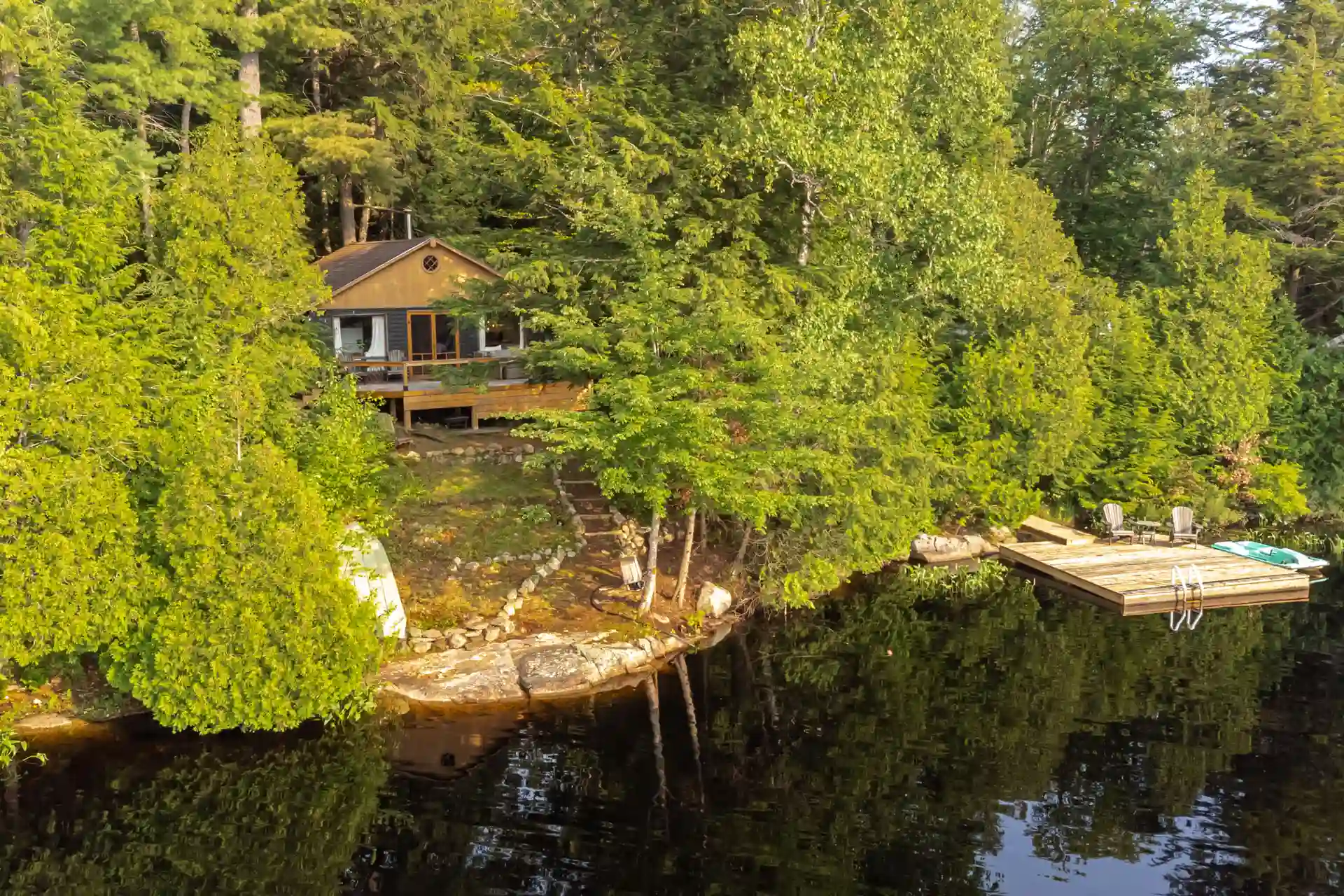
Drone or aerial photography is effectively mandatory for waterfront listings, and any operator hired to capture it should fly in compliance with Transport Canada’s drone safety regulations. A buyer cannot understand a property’s shoreline character, its relationship to the lake, its positioning within a bay, or the privacy of its lot from ground-level photography alone. An aerial view that shows the dock, the shoreline, the boathouse or lack thereof, and the surrounding water context communicates in seconds what ten paragraphs of description cannot. For properties with significant acreage or multiple structures, aerial photography is the only way to give buyers an accurate spatial understanding of what they are evaluating.
Water-level photography taken from a boat or kayak shows the approach to the property from the lake, the dock condition, and the true shoreline profile. This perspective is what owners experience every time they arrive by water, and it is often the image that creates the emotional connection that drives a booking or a showing. Interior photography should prioritize natural light and the water view connection. Every room that has a lake view should be photographed to capture that view. A dining room with a floor-to-ceiling window overlooking the water is a major selling feature; photographed from the wrong angle to avoid showing clutter, it becomes invisible.
How Should Listings Address Investment and Rental Income Potential?
For cottage properties that have a short-term rental history or are positioned for investment buyers, the listing description should address rental income potential in specific, factual terms rather than vague suggestions. Buyers who are evaluating a property for its income-generating potential are applying financial criteria to the purchase decision, and they need numbers, not adjectives.
A listing that states “recently generated $68,000 in verified annual rental income (booking records available)” communicates specific value that “excellent rental potential” does not. The qualifying phrase “booking records available” is critical: it signals that the claim is verifiable, which is what investment buyers require before they will take the income figure seriously. Overstating income or other property claims in a listing also carries real risk, since the Competition Bureau of Canada treats false or misleading representations in advertising, including real estate marketing, as a compliance matter. For properties managed by Cottage Vacations, actual booking data is available to support this claim in the listing and in pre-offer discussions with serious buyers.
Municipal STR bylaw compliance is also a material disclosure item for investment-positioned listings. A listing that acknowledges the applicable bylaw, such as the Township of Muskoka Lakes’ short-term rental framework, and confirms the property is compliant or licenced demonstrates transparency that sophisticated buyers reward. Omitting STR bylaw context from an investment-positioned listing creates risk that the buyer discovers the compliance issue after making an offer, which disrupts the transaction. The STR rules guide provides the regulatory context buyers need for each Ontario township.
How CV Real Estate Brings These Standards to Every Cottage Listing
CV Real Estate applies these listing standards to every property it brings to market in Ontario cottage country. The team writes descriptions from direct knowledge of the property and the lake, not from a template. Photography requirements include aerial and water-level coverage. Factual details about water, septic, access, and income history are included where available and verifiable. The investment analysis that Cottage Vacations provides for managed properties is incorporated into listings positioned for investor buyers.
If you are considering selling a cottage and want to understand how CV Real Estate would position and present your property, the book a selling call link is the starting point for that conversation.
Frequently Asked Questions
1. What is the most important element of a cottage listing description?
The single most important element of a cottage listing description is the opening sentence. It must lead with the property’s most distinctive and irreplaceable feature in specific, concrete terms. Generic openers like “stunning waterfront retreat” do not earn the click from experienced cottage buyers. A specific opener such as “240 feet of south-facing frontage on Lake of Bays with a grandfathered double boathouse” immediately communicates irreplaceable value and attracts the right buyer while filtering out those who are looking for something different. More on how CV Real Estate presents listings is available through the helping you sell resource.
2. Should a cottage listing include information about the septic system and water supply?
Yes, and proactively including this information signals a well-maintained property and reduces buyer hesitation. Sophisticated cottage buyers will investigate water quality and septic system condition as part of their due diligence regardless of what the listing says. A description that states “drilled well with annual water testing, conventional septic installed 2018, last pumped 2024” gives buyers confidence and reduces the friction of discovery. Omitting this information creates uncertainty that buyers fill with worst-case assumptions. The cottage inspection guide explains what buyers are evaluating in due diligence.
3. Is drone photography necessary for a cottage listing?
Drone or aerial photography is effectively necessary for waterfront and rural cottage listings, not optional. Buyers cannot understand a property’s relationship to the lake, the privacy of its lot, the character of the shoreline, or the spatial layout of multiple structures from ground-level photography alone. An aerial view communicates the property’s setting, its water access, and its positioning within the bay or cove in seconds. Water-level photography showing the approach from the lake is equally valuable. For cottage country properties in Muskoka, Haliburton, and Georgian Bay, professional aerial photography is a baseline standard that buyers expect. The featured listings on the CV Real Estate site reflect this standard.
4. How should rental income be mentioned in a cottage listing?
Rental income should be stated in specific, verifiable terms with documentation available, not as a vague suggestion of “excellent income potential.” A specific figure such as “$72,000 in 2025 rental income, booking records available upon request” is far more credible to investment buyers than general language. Including a reference to bylaw compliance in the relevant municipality adds further credibility. Cottage Vacations provides verified booking data for managed properties that CV Real Estate can incorporate directly into listings targeting investment-minded buyers. More on how rental data supports property value is available through the rental data resource.
5. What information about lake access and road access should be in a cottage listing?
Road type and accessibility are among the most practically important details for cottage buyers and should be stated explicitly. Whether the road is year-round or seasonal, municipal or private, plowed or not in winter, and whether the property is boat-access only all affect financing eligibility, insurance rates, and use pattern. Buyers who discover that a property has boat-only access after investing significant time in the showing process are frustrated; buyers who self-select based on this information in the listing are genuinely interested. State the access type, maintenance responsibility, and seasonal availability clearly in the listing description. The buying in Muskoka guide covers what buyers need to know about access and due diligence.
Key Takeaways
- The opening line of a cottage listing must lead with the property’s single most distinctive and irreplaceable feature in specific, concrete terms, not with generic adjectives that apply to any waterfront property.
- Cottage buyers need specific factual detail about shoreline exposure, access type, water and septic, internet connectivity, sleeping configuration, and included structures to self-qualify before requesting a showing.
- Aerial and water-level photography are effectively mandatory for waterfront cottage listings; buyers cannot evaluate a property’s lake relationship, shoreline character, or site layout from ground-level photography alone.
- Investment-positioned listings should state rental income in specific, documented figures with booking records available for verification, and should confirm STR bylaw compliance in the relevant municipality.
- Proactively disclosing water quality, septic condition, and access type in the listing description reduces friction, builds trust with buyers, and attracts better-qualified showing requests.
- CV Real Estate applies these listing standards to every cottage country property, using lake-level knowledge, aerial photography, and verified Cottage Vacations rental data to position properties accurately and compellingly.
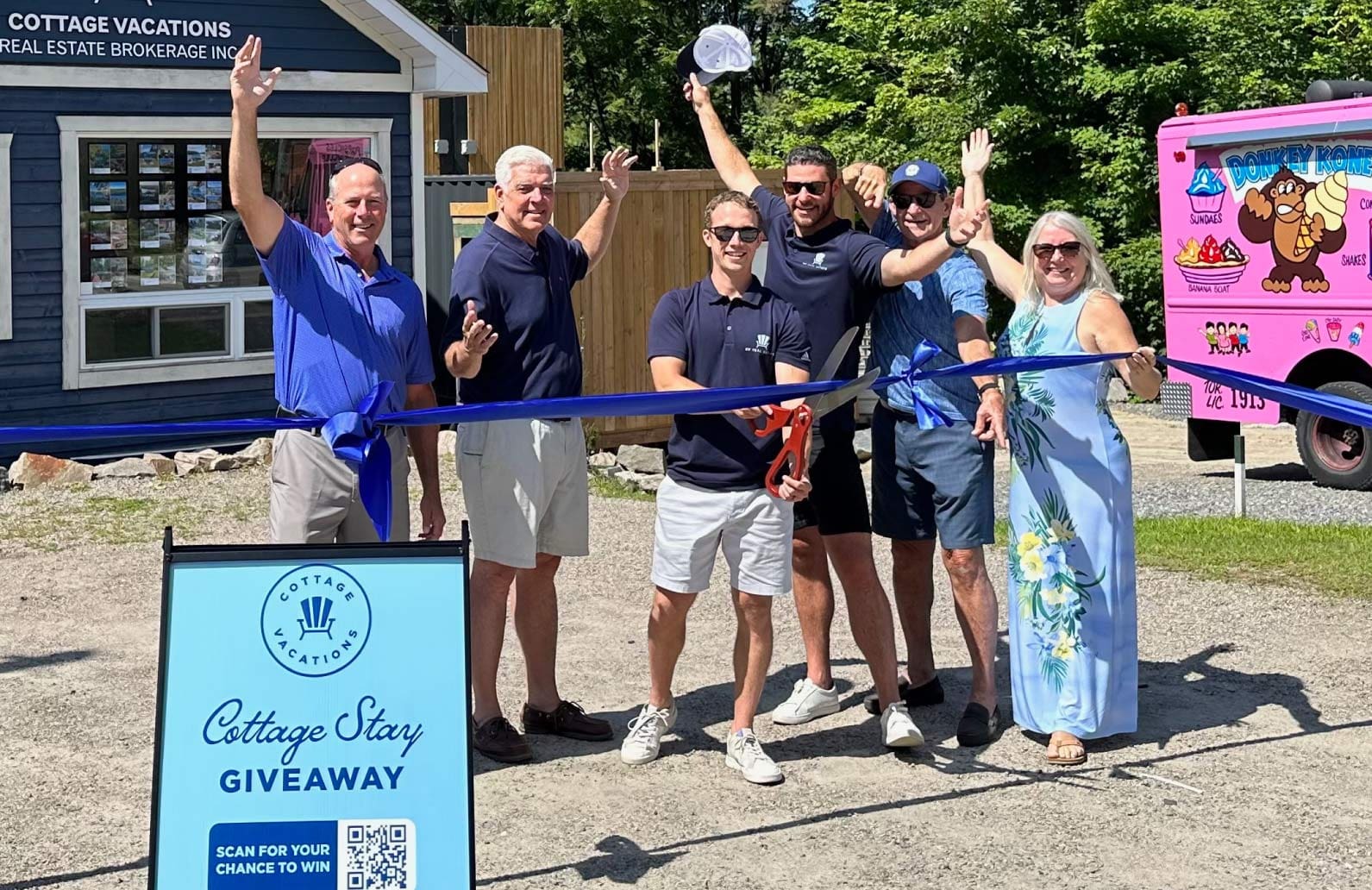
Meet The Team
We’re cottage country enthusiasts and vacation property experts, helping renters, buyers, and sellers reach their goals for more than 20 years.