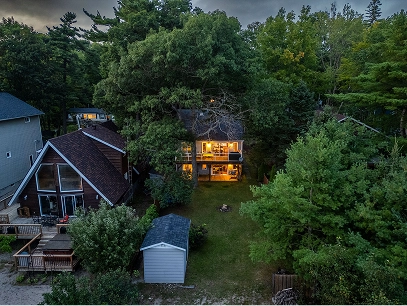
Recreational property advice in Ontario is provided by brokerages and agents who specialise in cottage country transactions, not general real estate professionals whose knowledge base is built on urban and suburban markets. The most useful advice arrives before the property search begins, covering which region fits your intended use, what seasonal and regulatory variables to understand early, and what due diligence a recreational property purchase requires that a standard home purchase does not.
What Is Recreational Property Advice and Who Needs It?
Recreational property advice is guidance provided to buyers who are evaluating the purchase of a cottage, waterfront property, or seasonal retreat before they begin actively searching for a specific property. It is distinct from agent representation during a property search; it covers the pre-search questions that determine whether a buyer is looking in the right region, for the right property type, with the right financial and regulatory expectations. Buyers who skip this stage and begin searching without it frequently discover the questions they should have asked only after they have submitted an offer.
The buyers who benefit most from recreational property advice are those who are entering cottage country for the first time, those evaluating a recreational property from outside Ontario, and those who are assessing a property as an income-generating investment rather than a personal retreat. Each of these buyer types faces a different category of pre-search questions, and the quality of the advice they receive at this stage directly affects the quality of the decisions they make during the search and the offer process.
CV Real Estate provides pre-search advisory consultations for buyers at this stage. The brokerage’s community guides cover the regional context for Muskoka, Haliburton, Parry Sound, Georgian Bay, the Kawarthas, and surrounding markets, giving buyers a structured starting point before any specific property discussion begins.
What Does Recreational Property Advice Actually Cover?
Recreational property advice covers four primary categories that are specific to cottage country purchases and that a standard residential agent consultation does not address. The first is regional fit: which lake, which municipality, and which access type matches the buyer’s intended use, seasonal availability requirements, and budget. The second is regulatory context: what STR bylaws apply in the target region, what road access classifications mean for year-round use, and what waterfront structure permit requirements exist. The third is financial framing: how to evaluate a recreational property on both lifestyle and income metrics when both apply. The fourth is due diligence scope: what inspections a recreational property purchase requires that a residential purchase does not.
These four categories are interconnected, and the answers to questions in one category frequently change the answers in another. A buyer who intends to generate STR income from their purchase needs regional advice that accounts for the applicable township bylaw before they begin searching, not after they have found a property they like. The Federation of Ontario Cottagers’ Associations (FOCA) provides publicly available guidance on waterfront ownership responsibilities, which is useful background for buyers entering the cottage country market for the first time.
CV Real Estate approaches pre-search advisory consultations with the framework that a buyer’s intended use determines which questions need answers before the search begins. A lifestyle buyer and an investment buyer evaluating the same lake require different advice, and a specialist who can distinguish between these two advisory tracks is more valuable at the awareness stage than an agent who treats all cottage country buyers as interchangeable.
If you are at the stage of understanding what a recreational property purchase in Ontario involves before committing to a region or a property type, CV Real Estate provides pre-search consultations that cover all four advisory categories without requiring you to have a specific property in mind first.
How Does Region Selection Affect a Recreational Property Purchase?
Region selection is the most consequential pre-search decision in a recreational property purchase, and it is also the one that buyers who do their own research most frequently get wrong. The cottage country regions of Ontario are not interchangeable. Muskoka, Haliburton, Parry Sound, Georgian Bay, the Kawarthas, Simcoe County, and Bruce Peninsula each have distinct lake ecology, access conditions, price ranges, seasonal demand patterns, STR regulatory environments, and buyer demographics. A property that meets a buyer’s stated criteria in one region may not exist in the same form in another.
Lake-specific knowledge within each region matters as much as regional knowledge. The motor restrictions, water clarity, boating character, and community profile of different lakes within the same municipality can vary significantly. A buyer who arrives in cottage country with a general preference for “a lake in Muskoka” without understanding the differences between specific lakes is not yet equipped to make a sound purchase decision. Specialist advisors map a buyer’s intended use to the specific lakes and regions where that use is supported by the property type, the regulatory environment, and the access conditions. Ontario’s Ministry of Natural Resources and Forestry maintains public records on lake classifications and permitted uses that a specialist incorporates into regional advisory conversations.
Seasonal access is a dimension of region selection that buyers frequently underestimate. A cottage that is accessible by a municipally maintained road in summer may be effectively inaccessible during mud season or early spring thaw. An island-access property in Georgian Bay requires a boat and a marina relationship for every visit from spring ice-out to fall freeze-up. These are not incidental details; they determine whether the property is usable for the buyer’s intended purpose and whether it can be operated as an STR during shoulder seasons.
What Is the Try Before You Buy Model and How Does It Support Recreational Property Advice?
The Try Before You Buy program offered by CV Real Estate is a direct response to the most common gap in recreational property advice: the difference between what a buyer expects a lake experience to be and what it actually is during extended use. The program allows prospective buyers to stay at a property managed by Cottage Vacations before committing to a purchase, providing first-hand experience of a specific lake, access road, seasonal conditions, and property type before a purchase decision is made.
For buyers who are considering a recreational property from outside cottage country, this model addresses questions that no amount of photography, listing copy, or advisor consultation can answer reliably. How does the property function during a shoulder season stay? What is the access road like in early spring? How does the waterfront perform in a low-water year? These are questions that require direct experience to answer, and the Try Before You Buy program structures that experience as a pre-purchase advisory tool rather than a post-purchase discovery.
What Should a Buyer Know About Due Diligence Before Searching?
A recreational property purchase in Ontario requires a set of specialist inspections and assessments that a standard home inspection does not cover. Understanding this scope before the search begins helps buyers budget appropriately and structure offer conditions that protect them during the conditional period. The full due diligence package for a lakefront or waterfront recreational property includes a septic inspection, a water quality laboratory test matched to the water source type, a dock and boathouse structural assessment, a road access evaluation, and a WETT inspection for any wood-burning appliance. A buyer who does not understand this scope before making an offer may submit conditions that are too narrow to provide adequate protection. The cottage buying checklist that CV Real Estate provides outlines the full scope of due diligence that buyers should plan for before any offer is submitted.
The cost of a complete due diligence package for a recreational property purchase in Ontario typically ranges from $1,500 to $5,000 or more depending on the property type, the number of specialist assessments required, and the condition complexity of the specific property. This cost is not optional; it is the mechanism by which a buyer confirms what they are purchasing before the conditional period expires. A buyer who enters a recreational property search without understanding this cost is not yet fully prepared for the purchase process.
What Recreational Property Advisors in Ontario Know That General Agents Do Not
The knowledge that separates a recreational property specialist from a general agent is not primarily about real estate law or transaction mechanics, which are the same across property types. It is about the specific variables that determine whether a recreational property is what it appears to be. A generalist agent cannot reliably evaluate whether a septic system is undersized for the property’s intended STR occupancy, whether a dock’s permit status is compliant under current MNRF requirements, or whether the applicable township’s STR bylaw permits the rental model the buyer intends to operate. These are the questions that make or break a recreational property purchase, and they require a practice that is built specifically around cottage country transactions to answer reliably.
CV Real Estate’s advisory model is built on the intersection of waterfront real estate and active vacation rental management through its sister company Cottage Vacations. This combination means that the brokerage’s advisory process for recreational property buyers is informed by real operational experience across the same markets where the properties are located, not by general market estimates or comparable listing analysis alone.
Starting Your Recreational Property Search with the Right Advice
The quality of the advice a buyer receives before their recreational property search begins determines the quality of the decisions they make throughout the search, the offer, and the conditional period. CV Real Estate provides pre-search advisory consultations for buyers at any stage of the decision process, from initial regional exploration through to offer preparation. Contact CV Real Estate to begin with a consultation that covers your intended use, your target region, and the due diligence scope for your purchase before you commit to a property search direction.
Frequently Asked Questions
1. What is recreational property advice and how is it different from agent representation?
Recreational property advice is pre-search guidance that helps buyers understand which region, property type, and regulatory environment fits their intended use before they begin actively searching. Agent representation begins when a buyer is searching for a specific property and needs negotiation, due diligence coordination, and transaction management. The advisory stage comes first and determines whether the search is pointed in the right direction. Buyers who begin searching before receiving this guidance frequently discover misalignments between their expectations and the available inventory. First-time cottage buyers benefit most from structured pre-search advisory before any property search begins.
2. When is the best time to seek recreational property advice in Ontario?
The best time to seek recreational property advice in Ontario is at least three to six months before a buyer intends to make an offer. This window allows time for regional exploration, for visits to target areas under realistic seasonal conditions, and for the financial and due diligence preparation that a recreational property purchase requires. Buyers who seek advice only after finding a property they like are already behind the timeline that a well-prepared offer requires. Understanding the best buying season is part of the pre-search advisory conversation that a specialist provides before any specific property is identified.
3. What is the difference between waterfront access and waterfront property?
A waterfront property has direct ownership of the shoreline and typically includes riparian rights that govern the owner’s use of the water and the ability to maintain dock and boathouse structures. A water-access property provides access to a body of water, often through a shared or deeded right of way, without the owner holding title to the shoreline itself. The distinction affects value, insurability, permitting rights, and STR licensing eligibility in ways that buyers frequently do not understand before they begin their search. Waterfront vs water access is a foundational advisory topic that CV Real Estate covers in every pre-search buyer consultation.
4. How does recreational property advice differ between Muskoka and Haliburton?
Muskoka and Haliburton are both leading Ontario recreational property markets, but the advisory content differs significantly between them. Muskoka commands higher price points, has more established STR regulatory frameworks, and attracts a buyer pool that includes more high-net-worth and international purchasers. Haliburton offers lower entry price points, different lake character, and a distinct regulatory environment. A buyer whose budget and intended use fits one market may not find equivalent options in the other. Haliburton vs Muskoka covers the key advisory distinctions between these two markets that buyers at the pre-search stage should understand.
5. Which Ontario regions do recreational property advisors cover?
Recreational property advisors who specialise in Ontario cottage country typically cover Muskoka, Haliburton, Parry Sound, Georgian Bay, the Kawarthas, Simcoe County, and Bruce Peninsula. Each region has its own lake character, access conditions, price range, STR regulatory environment, and buyer demographic, and a specialist who covers all of them from a single practice can map a buyer’s intended use to the most appropriate region before the search begins. CV Real Estate covers all of these regions. Buyers can begin regional research through the community guides for each market area before scheduling a consultation.
Key Takeaways
- Recreational property advice is pre-search guidance that covers region selection, regulatory context, financial framing, and due diligence scope before a buyer begins actively searching for a specific property.
- The buyers who benefit most from this advisory stage are first-time cottage country buyers, out-of-province buyers, and investment-focused buyers whose financial model depends on STR income eligibility.
- Region selection is the most consequential pre-search decision, as each Ontario cottage country region has distinct lake character, access conditions, price dynamics, and STR regulatory environments.
- The Try Before You Buy program offered by CV Real Estate gives buyers the opportunity to experience a specific lake, access road, and property type at first hand before committing to a purchase direction.
- A complete recreational property due diligence package in Ontario typically costs $1,500 to $5,000 and covers septic, water quality, dock structure, WETT, and road access assessments that a standard home inspection does not include.
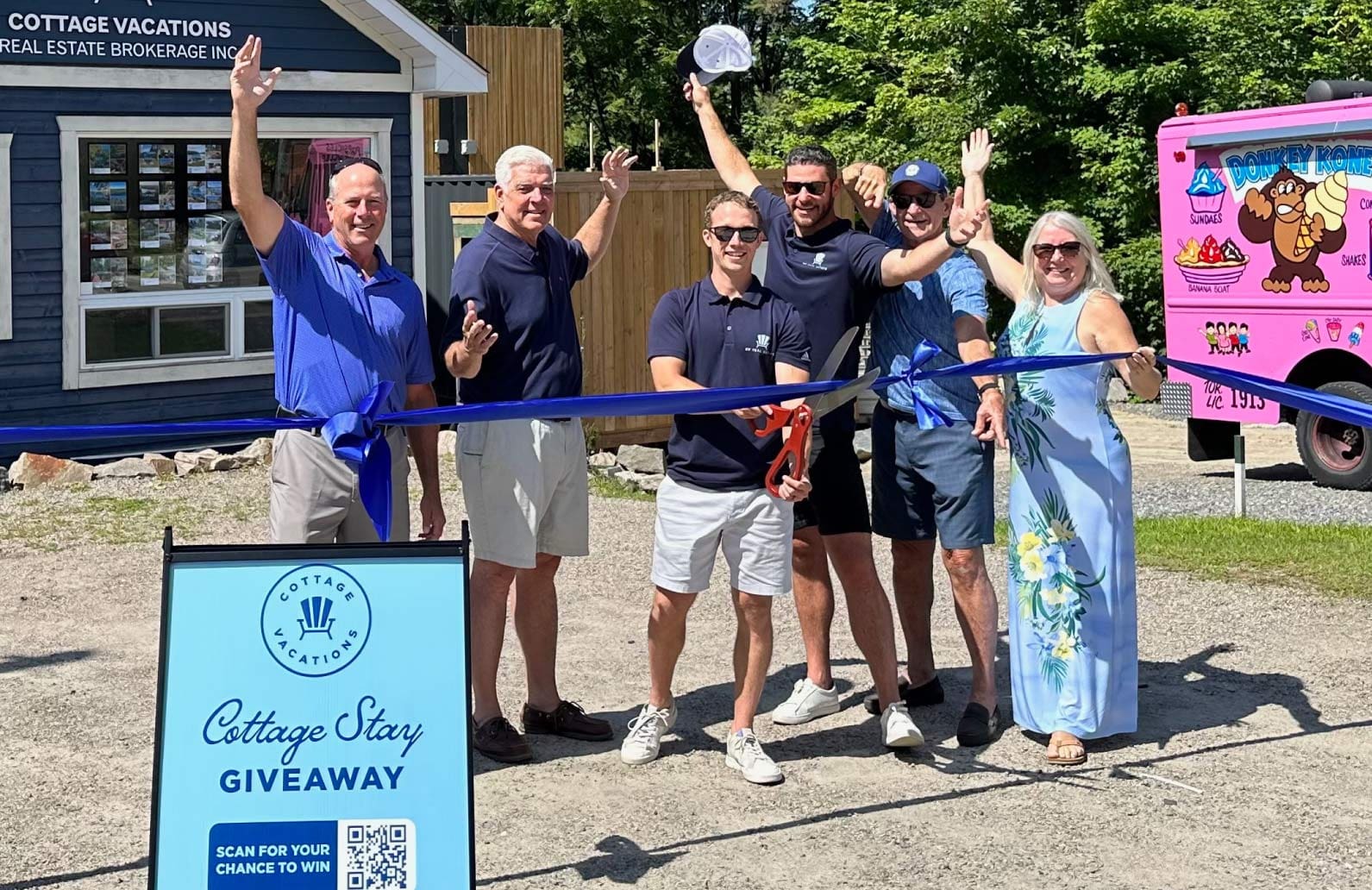
Meet The Team
We’re cottage country enthusiasts and vacation property experts, helping renters, buyers, and sellers reach their goals for more than 20 years.