Top vacation property ROI experts deliver a return picture built on verified operational data, complete cost accounting, and a conservative scenario methodology that survives real-world conditions. What separates them from agents who produce standard income projections is not access to better software but access to actual property management records, the discipline to account for every operating cost line, and the professional obligation to present outcomes that hold under realistic assumptions rather than ideal ones.
Why Do So Many Vacation Property ROI Projections Turn Out to Be Wrong?
Vacation property ROI projections produced by general real estate agents in Ontario cottage country are systematically optimistic for three structural reasons. The first is data source: most general agents use publicly visible platform listing data or third-party aggregator tools to estimate occupancy and revenue. These sources capture listed availability and asking rates, not actual bookings, actual rates achieved, or actual seasonal variation across a full year. The second is cost omission: general agent projections typically include the most visible cost items, such as cleaning fees and platform commissions, and omit maintenance reserves, STR insurance premiums, licensing costs, and the management fee that will apply if the owner is not self-managing. The third is selection bias in comparable properties: agents building a projection tend to use high-performing comparable listings as their benchmark rather than the full distribution of performance across comparable properties in the target lake and region. Real Estate Council of Ontario conduct standards require agents to act in clients’ best interests, but the absence of a defined methodology standard for STR income projections means that the quality of these analyses varies entirely by the agent’s data access and professional discipline.
The consequence for investors is that the gap between projected and actual ROI is consistently negative rather than randomly distributed around the projection. Properties that appeared to meet the investor’s return requirements at the purchase price have produced lower net yields after accounting for costs that were not in the projection, occupancy rates that did not reach the benchmark used, and regulatory constraints that limited the achievable occupancy below what the income model assumed. These are not random errors; they are predictable outcomes of a projection methodology that is systematically biased toward favourable results.
The investor profile most affected by this pattern is the experienced investor who has purchased investment properties in other asset classes and who brings analytical rigour to income projections but lacks the specific data access to verify the assumptions in a cottage rental analysis independently. These investors recognise a well-presented projection, accept the structure of the analysis, and discover the weaknesses only after closing when the property begins operating. Top ROI experts specifically address the inputs most likely to create this gap between projection and reality.
What Does a Genuine Vacation Property ROI Expert Use as Their Data Foundation?
A genuine vacation property ROI expert builds their analysis on verified management records rather than on platform data or comparable listing estimates. Verified management records are booking histories from properties actually managed by the advisor or their affiliated property management operation in the target market. These records contain actual occupancy rates by month and by season, actual nightly rates achieved for each booking rather than listed asking rates, actual cleaning frequency per week during peak season, actual guest review scores that reflect the property’s competitive positioning, and actual maintenance call frequency that informs the maintenance reserve estimate. This is categorically different from a projection built on what similar properties are asking guests to pay and how often their calendars appear to be blocked. CV Real Estate’s rental data advantage describes specifically how the Cottage Vacations management portfolio data is applied to investment buyer consultations in a way that no competing brokerage can replicate.
The practical test for whether an advisor is using verified management data or platform estimates is simple: ask them to name specific properties they manage on the target lake or in the target municipality, and ask them to describe the actual occupancy rate distribution they have observed for those properties over the past two to three seasons. An advisor with genuine management data can answer these questions specifically. An advisor relying on platform aggregator tools will describe a market trend rather than a portfolio observation.
Lake-level data specificity is the second test. A genuine ROI expert can distinguish between the income profile of properties on different lakes within the same region. They know that properties on a motor-restricted lake achieve different nightly rate ceilings and attract a different guest demographic than properties on an unrestricted lake five kilometres away, and they apply these distinctions in their projection rather than using a regional average that obscures them.
How Do Top ROI Experts Approach the Operating Cost Side of the Model?
Top vacation property ROI experts treat the operating cost model as the component most likely to determine whether the investment works, not the revenue projection. This is the inverse of how general agents approach the analysis: most agents lead with revenue because it is the more compelling number and treat cost as a secondary disclosure. A genuine ROI expert leads with cost because the revenue projection, even when accurate, only produces a positive investment decision if the cost structure is fully accounted for. CRA rental income classification guidance distinguishes between properties operated as active rental businesses and those generating passive rental income, which affects both the applicable tax rate on net income and the deductibility of certain costs. A complete ROI model accounts for the tax treatment of net rental income in the investor’s specific situation.
The cost items that most frequently separate a complete operating cost model from an incomplete one are: the maintenance reserve, which should be modelled as one to two percent of property value annually rather than as a nominal fixed figure; STR-specific insurance premiums above standard cottage coverage, which can add meaningfully to the annual cost base; the STR licensing and annual registration fee for the applicable municipality, which is a recurring cash cost that most general agent projections omit; and the implicit cost of owner time for self-managed properties, which is frequently disguised as a cost saving but represents real economic value.
A complete cost model also accounts for the gap year: the first season after purchase when a new STR property is building reviews, establishing its listing ranking on booking platforms, and calibrating nightly rates against actual booking demand. Most properties do not achieve their steady-state occupancy rate in their first operating season. A projection that assumes steady-state performance from the first week of ownership is overstating first-year income, which is the income that matters most to an investor financing the purchase.
If you have received vacation property ROI projections that you want evaluated against verified data before making a purchase decision, CV Real Estate provides independent projection review using verified Cottage Vacations management data as the benchmark for the assumptions and cost structure in any analysis you have received.
How Do Top Experts Model Scenarios Rather Than Single-Point Projections?
A key methodological distinction between a genuine ROI expert and an agent producing a standard income projection is the use of scenario modelling rather than a single-point projection. A single-point projection presents one outcome based on one set of assumptions and gives the investor no visibility into how sensitive the return is to changes in any input. A scenario model presents a base case, a conservative case, and an optimistic case, each built on clearly stated and internally consistent assumptions. The investor can then evaluate which scenario their purchase decision is most exposed to and assess whether the property still meets their return requirements if the conservative case proves to be the actual outcome. Statistics Canada accommodation sector data provides macroeconomic context for the short-term accommodation sector in Canada that a genuine ROI expert incorporates into the market backdrop of their scenario assumptions, rather than treating the target property as operating in isolation from broader market trends.
For Ontario cottage rental properties, the conservative case is the most diagnostic scenario because it reveals whether the investment works under conditions that are within the normal range of actual outcomes rather than under ideal conditions that represent the upper end of the performance distribution. A conservative case for a Muskoka cottage rental property would apply a ten to fifteen percentage point reduction in peak-season occupancy relative to the benchmark, a five to ten dollar reduction in average daily rate relative to current market asking rates, a maintenance cost actuals figure rather than a planning benchmark, and a first-year ramp-up discount to the full-year revenue figure. Muskoka rental income covers the actual income distribution for Muskoka cottage rental properties as a reference for calibrating conservative case occupancy and rate assumptions.
What Does a Credible Vacation Property ROI Picture Actually Look Like?
A credible vacation property ROI picture for an Ontario cottage presents the following components in explicit and auditable form: gross revenue by month and by season with stated occupancy rate and nightly rate assumptions; platform commission deduction applied to gross revenue; cleaning cost total calculated from turnover frequency and per-clean cost rather than estimated as a lump sum; property management fee if applicable, stated as a percentage of gross revenue; maintenance reserve at one to two percent of property value; insurance premium including STR endorsement cost; property tax; STR licensing fee; and net cash flow before and after financing costs. The ROI figure is derived from net cash flow as a percentage of equity invested, not gross revenue as a percentage of purchase price. ROI calculator on the CV Real Estate website provides an interactive framework for building this calculation from the component inputs before a full advisory consultation.
The financing structure affects the ROI calculation significantly and should be modelled explicitly rather than omitted on the grounds that financing is the investor’s own decision. A property that delivers a positive net yield on an all-cash basis may deliver a neutral or negative cash flow when a 30 to 35 percent down payment mortgage is applied against the net rental income, depending on the prevailing interest rate environment. A genuine ROI expert presents both the unleveraged and the leveraged return so the investor understands the impact of their financing choice on cash flow.
The holding period assumption also belongs in a credible ROI picture. A property that produces modest annual cash flow but significant appreciation over a five to ten year holding period may deliver a better total return than a property with higher current yield and lower appreciation potential. A genuine ROI expert frames the total return picture over the investor’s intended holding period rather than presenting only the year-one income yield as if it were the entire investment thesis.
The Methodology Gap Is What Separates a Genuine ROI Expert from a Projection Producer
The difference between a top vacation property ROI expert and a general agent who produces an income projection is not the software they use or the market they operate in. It is the methodology they apply: whether their data foundation is verified management records or platform estimates, whether their cost model is complete or partial, whether they present scenarios or a single point, and whether they present the total return picture or only the gross revenue headline. Each of these methodological choices compounds the others, and the cumulative gap between a complete expert analysis and a standard agent projection can be the difference between an investment that performs to expectations and one that disappoints.
CV Real Estate applies the methodology described in this post to every investment buyer consultation. The data foundation is the Cottage Vacations management portfolio. The cost model is complete. The analysis presents a base case and a conservative case. The ROI picture covers both the leveraged and unleveraged return and frames the outcome over the investor’s intended holding period. This is the standard an investor should expect from any advisor they trust with a significant vacation property investment decision.
If you are evaluating a vacation property purchase in Ontario and want a ROI analysis that meets this standard before you make a purchase decision, contact CV Real Estate to schedule a consultation that covers the verified data, complete cost accounting, and scenario modelling that a credible vacation property ROI picture requires.
Frequently Asked Questions
1. What is a realistic ROI range for Ontario cottage rental properties?
Realistic net ROI for Ontario cottage rental properties varies significantly by lake, property type, management structure, and purchase price relative to achievable income. Properties on high-demand lakes with professional management, strong occupancy histories, and purchase prices that reflect current market conditions typically deliver net yields in a range that an investor should evaluate on a property-specific basis rather than against a market average that obscures too much variation to be useful. A credible ROI expert will not provide a market-average figure without first understanding the specific property, lake, management structure, and financing scenario. Best cottage rental ROI covers the variables that drive the strongest returns in the Ontario cottage rental market.
2. Is buying a cottage a good investment in Ontario compared to other property types?
A cottage in Ontario can be a strong investment relative to other property types for investors who structure the purchase correctly: buying at a price that reflects the achievable income rather than the lifestyle premium, selecting a lake and property type with documented rental demand, ensuring STR compliance before closing, and managing the property professionally to achieve the occupancy rates that support the financial model. For investors who do not apply this framework, a cottage purchase can produce a lifestyle asset that costs more to own than it earns. The comparison with other property types depends entirely on the specific property and the specific investor’s ability to execute the operational requirements of STR management. Cottage investment Ontario covers the investment case for Ontario cottage properties with specific reference to the variables that separate strong from weak investment candidates.
3. What operating costs do most vacation property ROI projections omit?
The operating costs most commonly omitted from vacation property ROI projections produced by general agents are the maintenance reserve at one to two percent of property value annually, STR-specific insurance premiums above standard cottage coverage, STR licensing and annual registration fees under the applicable township bylaw, the first-year ramp-up discount reflecting lower occupancy while the listing builds reviews and ranking, and the implicit cost of owner time for self-managed properties. Each of these omissions reduces net yield, and their combined effect is typically large enough to change the investment decision at the projected purchase price. Full cottage operating costs provides a complete cost reference that investors can use to test the completeness of any ROI projection they receive.
4. How do STR regulations affect the ROI of a vacation property in Ontario?
STR regulations affect vacation property ROI in Ontario through three mechanisms: they cap the maximum guest occupancy the property can legally accommodate under the applicable township bylaw, which limits nightly rate potential and the occupancy-rate multiplier in the revenue model; they impose licensing costs and registration fees that are recurring cash costs in the operating model; and they create regulatory trajectory risk that can reduce achievable occupancy if bylaw tightening reduces the permitted occupancy level after purchase. A genuine ROI expert accounts for all three mechanisms and presents a conservative scenario that applies a plausible occupancy reduction due to regulatory change. Rental regulations and values covers how Ontario cottage country STR regulations affect both rental income and property values across the key cottage country municipalities.
5. Who at CV Real Estate provides vacation property ROI analysis for investment buyers?
CV Real Estate’s investment buyer advisory is provided through the brokerage’s team of income property specialists whose practice is built on the intersection of waterfront real estate transactions and the active vacation rental management operations of sister company Cottage Vacations. Every investment consultation draws on verified Cottage Vacations portfolio data for the target lake and property type, township-specific STR regulatory knowledge, and a full operating cost model that reflects actual cottage rental market conditions rather than market averages. Income property experts is the primary resource for investment buyers who want to understand the advisory process before scheduling a consultation.
Key Takeaways
- Top vacation property ROI experts build their analyses on verified management records from active property operations, not on third-party platform aggregator data or comparable listing estimates.
- The operating cost model is the component most likely to determine whether a vacation property investment works, and it is also the component most likely to be incomplete in projections produced by general agents.
- Scenario modelling, including a conservative case that applies realistic downside assumptions, is a defining characteristic of a credible ROI expert’s methodology that a standard single-point projection does not provide.
- A complete ROI picture presents the leveraged and unleveraged return, accounts for the first-year ramp-up period, and frames the total return over the investor’s intended holding period rather than presenting only the year-one gross revenue headline.
- CV Real Estate applies verified Cottage Vacations management data, complete cost accounting, and scenario modelling to every investment buyer consultation, producing a ROI picture that meets the standard an experienced investor should expect.
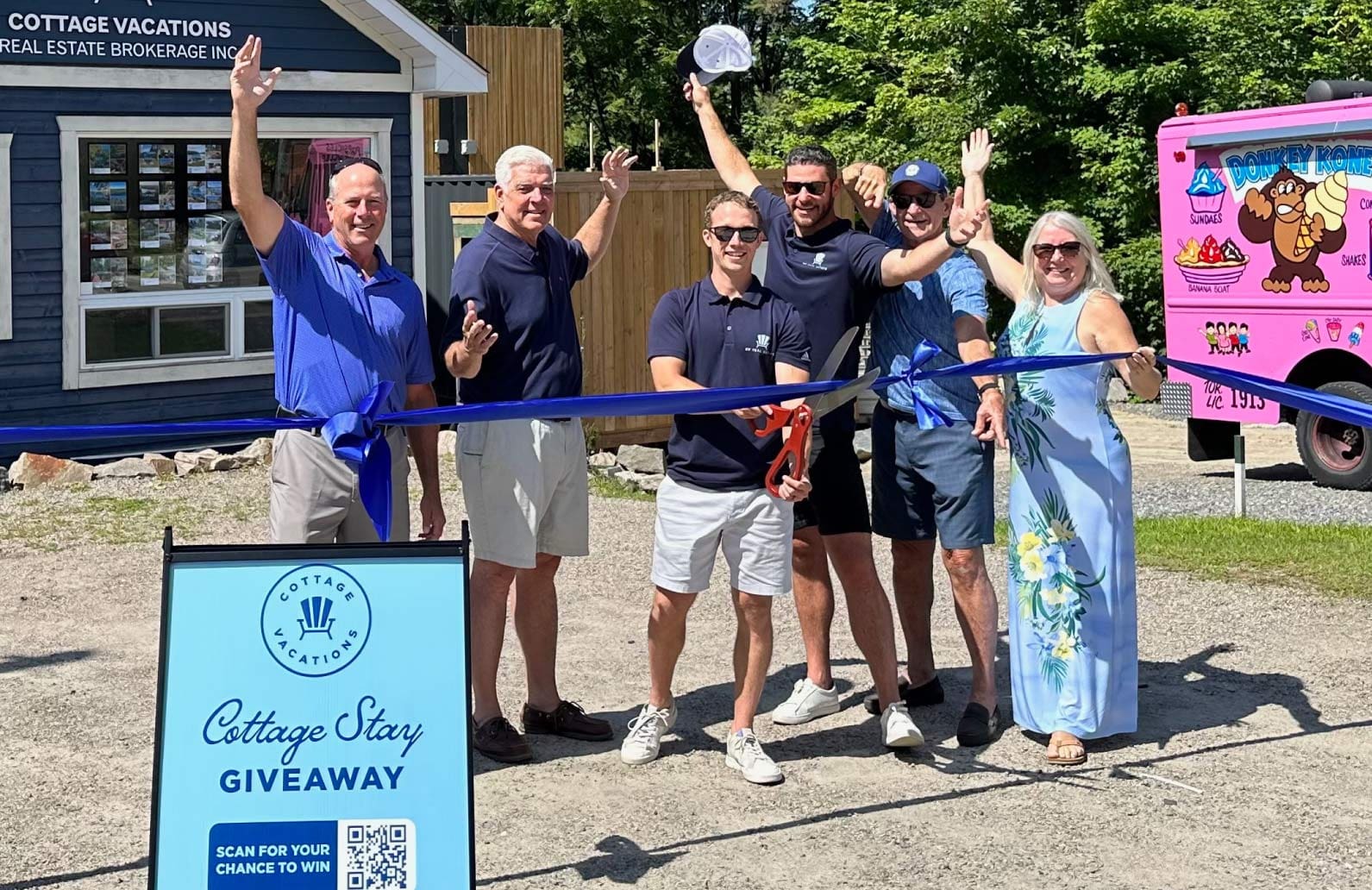
Meet The Team
We’re cottage country enthusiasts and vacation property experts, helping renters, buyers, and sellers reach their goals for more than 20 years.